With Love, Katie.
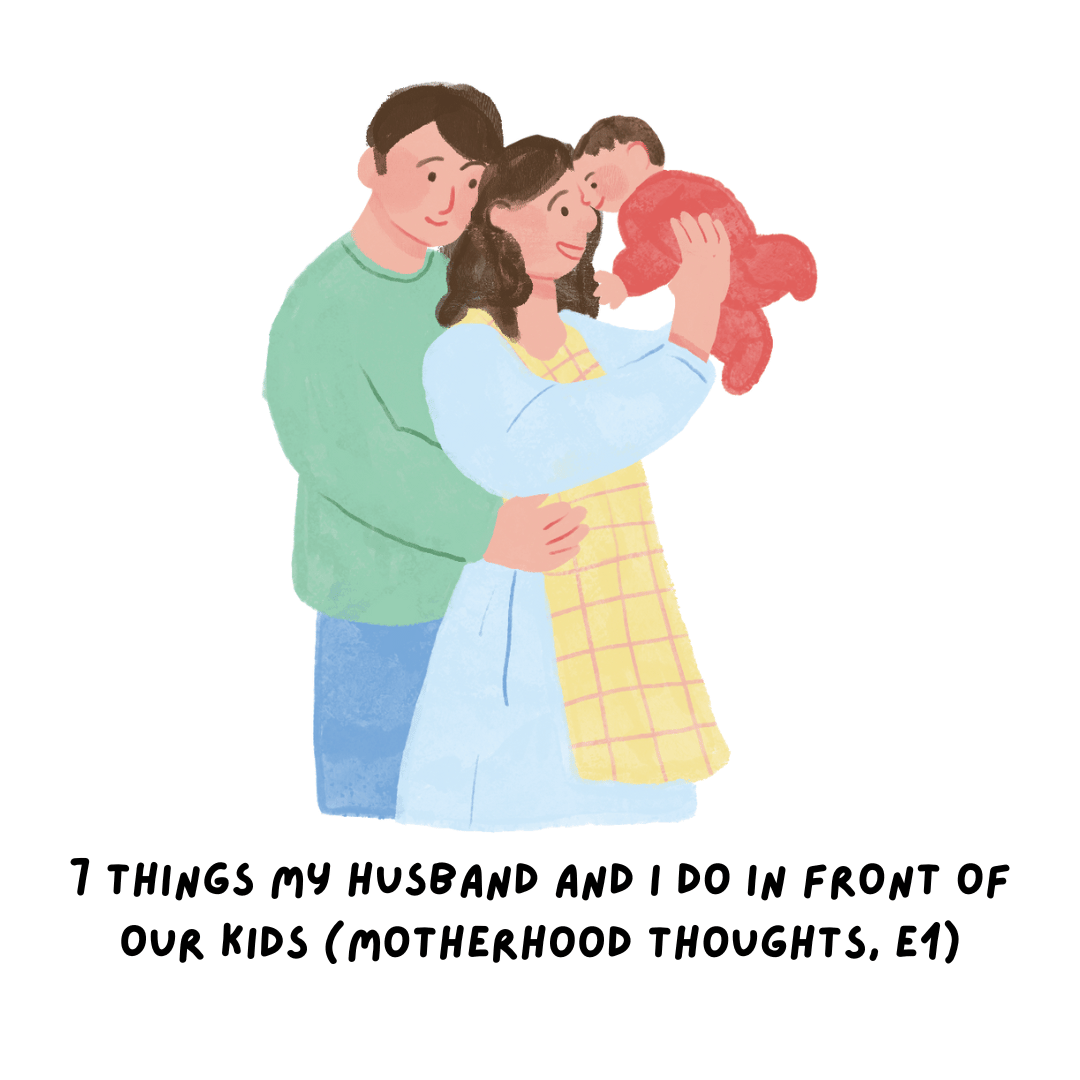

First things first, listen to me, we don’t sit down every morning and say, “Okay, today let’s model a healthy relationship or let’s play a new role today.” These 7 things my husband and I do in front of our kids come naturally, every day.
Most of the time, what our kids see is simply the byproduct of how we live together. We do these things accidentally, but also intentionally, because we believe that children learn far more from what they witness than from what they’re told. Our children don’t just learn from our words, oh no, they also learn from our reactions and little actions.
Our kids don’t need to see a perfect relationship. They need to see a real one, with small, cute actions and mistakes. One with respect, repair, affection, communication, and humor.
What we model in front of our children quietly becomes their blueprint for relationships. How partners speak to each other, but even, how they recover from mistakes. Later, this will help them express care, ask for help, and love and laugh together.

Here are 7 things my husband and I do in front of our kids, not because we’re perfect, but because we want them to witness what a healthy, realistic relationship looks like.
We Apologize Out Loud
We don’t apologize behind closed doors. If one of us miscommunicates or reacts unfairly, we say sorry out loud, so our kids can hear it. This matters more than we realized at first.
Children often see conflict, but they rarely see repair. By apologizing openly, we show them that mistakes don’t end relationships, accountability strengthens them. We want our kids to understand that saying “I’m sorry” isn’t a weakness or a loss of power. It’s a skill and it matter a lot, not only in childhood.
They learn that adults sometimes get it wrong, but after that, taking responsibility is normal.
We Say Thank You for Small Gestures
We say thank you for things that might seem insignificant to them or to us at the moment.
>Thank you for making coffee. Thank you for folding the laundry after I fell asleep with the girls. Thank you for handling bedtime, beacuse I had no energy during my menstrual phase.
Gratitude isn’t reserved for big moments. It lives in the everyday.
By saying thank you, we model appreciation, not entitlement. Our kids see that care is noticed, not assumed. That effort matters. That love doesn’t mean obligation.
Over time, this builds a household culture in which kindness is acknowledged rather than expected.
We Hug and Steal Kisses
There are days when we need affection, when we hug in the kitchen and steal quick kisses. Even more, we touch each other casually and affectionately, but nothing 18+, really. Cute, gentle moves.
Physical affection communicates safety, warmth, and connection. It shows our kids that love can be gentle and present in everyday life. That affection doesn’t disappear after marriage or kids. That closeness isn’t something to be embarrassed about.
These small moments teach them that love can be visible.I literally love it when we are in the kitchen, hugging each other, maybe steal 1-2-3 kisses, and I can see my girls in the door looking at us. All they want is a big hug, and they look so, so happy to see us happy. They are literally tiny, happy humans, with the biggest hearts in the universe.
We Ask Each Other: “How Was Your Day?” and “How Do You Feel?”
We ask each other how the day went. And more importantly, how we feel.
Our kids hear these questions. They watch us listen. They see that emotional check-ins aren’t dramatic or inconvenient; they’re part of caring for one another.
This models emotional literacy. It teaches them that feelings matter. That partners are curious about each other’s inner worlds, not just logistics.
They learn that relationships are about presence, not just function.
We Ask for What We Need
We don’t expect mind-reading at all: if one of us needs help, rest, space, or support, we say it out loud. I know it is very hard for women to ask for help, but it is part of healthy communication and relationships.
“Can you take over for ten minutes?” “I need a break.” “Can you listen for a moment?”
By doing this, we show our kids that needs are not burdens and asking for help is healthy. That boundaries are allowed.
This is especially important for mothers, who are often conditioned to sacrifice silently. We want our kids to see that caring for others doesn’t mean disappearing yourself. I really struggle with asking help, however I am learning every day something new and it is getting easier.
We Let Them See Reciprocal Care
Care flows both ways in our relationship. Sometimes my husband supports me, and other times I support him. There are times when we switch roles mid-day. Our kids see this balance, that one partner isn’t always carrying everything.
This teaches them that healthy relationships are not about one person holding it all together. They’re about partnership.
They learn that care is shared, flexible, and responsive, not fixed by gender or expectation.
We Often Laugh Loud
It might sound funny, but some days we laugh together, sometimes even loudly. Sometimes, over bad jokes, and sometimes when we’re exhausted, and everything feels a little ridiculous.
Our kids don’t always love how loud we get, but they see joy. They see a connection. They see that laughter can coexist with stress, mess, and long days. And at the end of another weekday, this matters.
Joy doesn’t have to wait for perfect conditions. It can exist in the middle of real life. We want our kids to associate relationships not just with responsibility, but with lightness.
Why This Modeling Matters More Than We Think
Children absorb relationship patterns constantly. They’re watching how adults speak, repair, express affection, handle stress, and show up for each other.
What they see becomes familiar. And familiar often becomes normal.
By modeling respect, repair, affection, communication, and humor, we’re not teaching lessons, we’re living them. Quietly. Repeatedly. Imperfectly.
And that’s enough.
Psst: Everyday Moments
We don’t do these things to perform good parenting, we do them because this is the relationship we want to live and the one we hope our children will someday expect for themselves. It is our choice, so we choose to do this.
For you, it might not work with the hug/kiss part, or with you laughing loudly like a crazy woman, but I love these things.
Healthy relationships aren’t built on grand speeches, but rather on small, consistent moments.
I really hope you don’t feel overwhelmed after reading this, but rather inspired to make some boring days look better by both of you trying your best. If you’re worried about modeling the “right” thing for your kids, remember this: you don’t need to be perfect, just present and honest.
Your everyday love is already teaching them more than you realize.
I hope you enjoyed my first post of Motherhood thoughts: 7 Things My Husband and I Do in Front of Our Kids.