With Love, Katie.

If there is one liquid that quietly outperforms half the cleaning aisle, it’s vinegar. While most people know vinegar belongs in a salad dressing or a jar of pickles, far fewer realize it has been used as a cleaning and disinfecting solution for hundreds of years. Long before antibacterial wipes, spray bottles, and neon-colored gels promised fast results, vinegar was the household staple for cutting grease, dissolving mineral deposits, and freshening surfaces. Using vinegar to clean your house is the easiest way to start detoxifying your home.
Today, as more families move toward a gentler, lower-toxin household routine, vinegar is making its way back into the cleaning cabinet, especially among moms who are tired of cleaners that require gloves, ventilation, and childproof storage.
But what exactly makes vinegar so powerful? And how can you use it in the areas of the home that need the most help? Let’s explore.
Using Vinegar to Clean
Distilled white vinegar is a mild acid, typically around 5-10% acetic acid. In Hungary, we always buy the 20% one. This level may sound low compared to industrial products, but for home cleaning, it’s exactly right. Buying a 5-10% one, you mix one part water with one part vinegar, and you already have a miracle spray.
Vinegar dissolves mineral buildup, soap residue, grease, and dirt without damaging most surfaces. It also has natural deodorizing properties, but not because it covers odors, but because it neutralizes them at the source.
Unlike bleach-based cleaners, vinegar doesn’t release fumes, doesn’t irritate the skin, and doesn’t require you to send the kids into another room while you scrub. It also doesn’t coat the house in synthetic fragrance, which can trigger headaches, respiratory irritation, or sensory overwhelm in sensitive children.
Although vinegar isn’t the right tool for every surface (more on that later), it’s a reliable, smart, budget-friendly substitute for multiple products at once. And yes, even though it comes with that signature sharp smell, the scent disappears completely once it dries.
Vinegar In the Kitchen
Kitchens are where vinegar really shines. This is the area of the home where oils, food residue, mineral deposits, and sticky surprises appear daily. Vinegar handles each of these quietly and effectively.
On stovetops and cookware, vinegar cuts the grease that builds up over time from cooking oils. A warm vinegar solution sprayed onto a greasy surface softens the layer, making it easier to wipe without harsh scrubbing. For pans or cookware with stubborn film, vinegar can be heated gently in the pan to loosen residue before washing.
Then there’s the kettle, the coffee maker, and any appliance that heats water. Mineral deposits from hard water that accumulate in these devices are shortening their lifespan. A vinegar rinse cycle dissolves those deposits and restores efficiency, a trick many people don’t learn until their appliance is already struggling. However, it is very important to read the instructions and make sure you can use acetic acid. However, if you are not sure, then opt for citric acid. Now that is a natural product you can use for sure in your kitchen appliances that heat water.
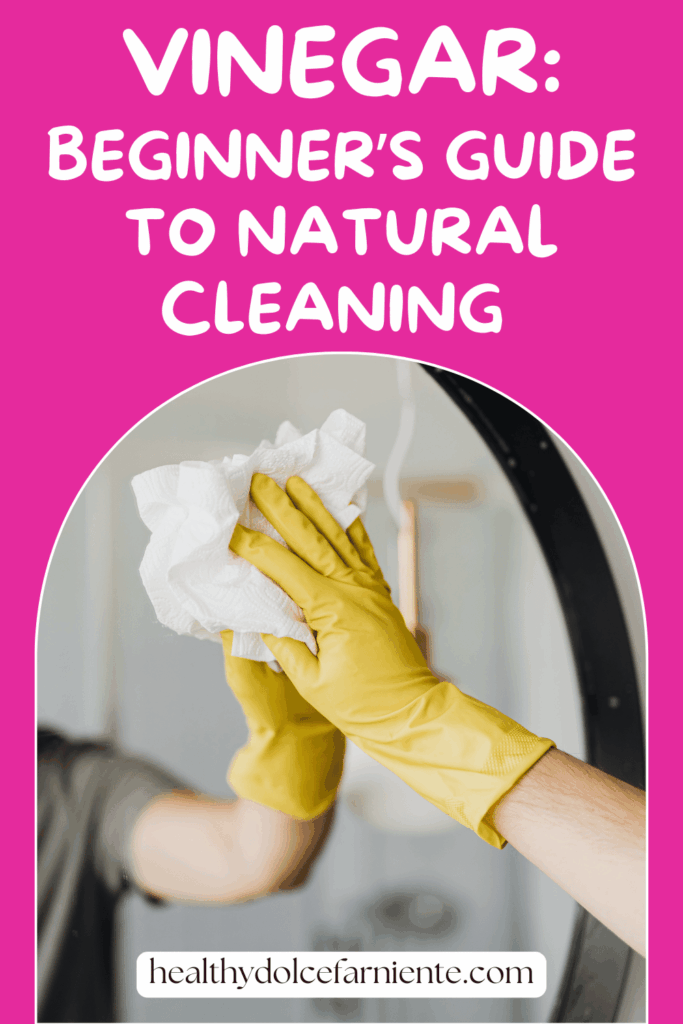
Use vinegar to clean glass and stainless steel. When diluted properly, it leaves a streak-free shine on fridge doors, oven doors, and cooktop glass, without leaving an oily film like some conventional products.
Drains in the kitchen benefit as well. When vinegar is poured into the drain, followed by baking soda, the fizzing reaction can help break up trapped food particles and oils, not enough to replace a plumber, but enough for weekly maintenance.
For families who hand-wash produce, vinegar can also play a role. A diluted vinegar soak helps remove residues and films from fruit skins and leafy vegetables. Rinse well and there’s no lingering taste. You can change this washing method by washing some fruits with soda.
In the Bathroom
Bathrooms are notoriously difficult to clean because they combine moisture, minerals, soap, and skin oils, the perfect recipe for stubborn buildup. Vinegar is uniquely suited for this environment because it dissolves the mineral content left behind by evaporated water.
Now listen, before we go where we want to, make sure you open the windows or door after showering or bathing to let the steam escape. Releasing humidity quickly helps prevent limescale buildup and reduces the risk of mould. Warm, trapped moisture creates the perfect environment for these small bacteria to grow, so good airflow makes a big difference. If excess moisture is a recurring issue in your home, a small dehumidifier can also help keep the bathroom dry and healthy.
This is why vinegar is often the go-to solution for:
- cloudy glass shower doors
- faucets with white crusty buildup
- showerheads that spray unevenly
- tiles that collect residue
- soap scum that sticks to tubs
Shower doors often develop a hazy film that conventional cleaners struggle to remove in a single pass. A vinegar spray, left to sit for a few minutes, breaks down the minerals that anchor the haze to the glass. When wiped clean, the surface looks noticeably brighter.
Faucets respond in a similar way. A cloth soaked in vinegar wrapped around the faucet for 15–30 minutes will lift the ring of hard water stains that collect at the base, no chiseling required.
Showerheads benefit from the classic vinegar bag trick: a plastic bag filled with vinegar, tied around the showerhead, and left overnight can restore water flow by dissolving mineral buildup inside the nozzles.
For sinks, bathtubs, and tile, vinegar can dissolve soap residue and mineral deposits without scratching the surface. And unlike bleach, you can spray it freely without needing to vacate the room or turn on every fan in the house.
In the Whole Home
Vinegar’s usefulness extends into the laundry room as well. As a fabric softener replacement, vinegar works without coating fibers in waxy residue. This is especially helpful for towels, which often lose absorbency over time due to traditional fabric softeners. A small amount of vinegar in the rinse cycle restores softness while keeping textiles breathable. Now listen, please: do not use fabric softener. It is full of chemicals, and it is not healthy for your baby’s skin or even for your skin.
For clothing that tends to hold odors, athletic wear, kitchen towels, or children’s clothing, vinegar helps neutralize smells instead of trapping them under strong perfumes. For families with eczema or sensitive skin, this can feel like relief. Many parents who struggle with laundry-related reactions find that removing synthetic fragrance from their routine significantly reduces itching or irritation.
Beyond laundry, vinegar acts as a natural deodorizer around the home. Carpet spills, pet areas, diaper pails, garbage bins, and even the inside of shoes respond well to vinegar’s odor-neutralizing properties. The smell dissipates as it dries, leaving no lingering vinegar scent.
Windows and mirrors are two more household items that benefit. A vinegar-water solution leaves glass streak-free without synthetic shine agents or aerosolized cleaners. This makes it ideal for fingerprints, a recurring feature in homes with children.
Conclusion
Vinegar will never be the star of glamorous cleaning commercials. But it does something more important: it cleans effectively without burdening the lungs, skin, or nervous system of the people who live there, especially the smallest ones.
For overwhelmed moms who want to simplify, reduce toxins, avoid headaches from strong fragrances, or just remove one more layer of complexity from daily life, vinegar is an easy win. You don’t have to overhaul your cleaning routine, spend extra money, or track down specialty products. You simply reach for something that already works.
If every improvement to home life could be this affordable, this simple, and this supportive, motherhood would feel just a little lighter and a lot less overwhelming.