With Love, Katie.
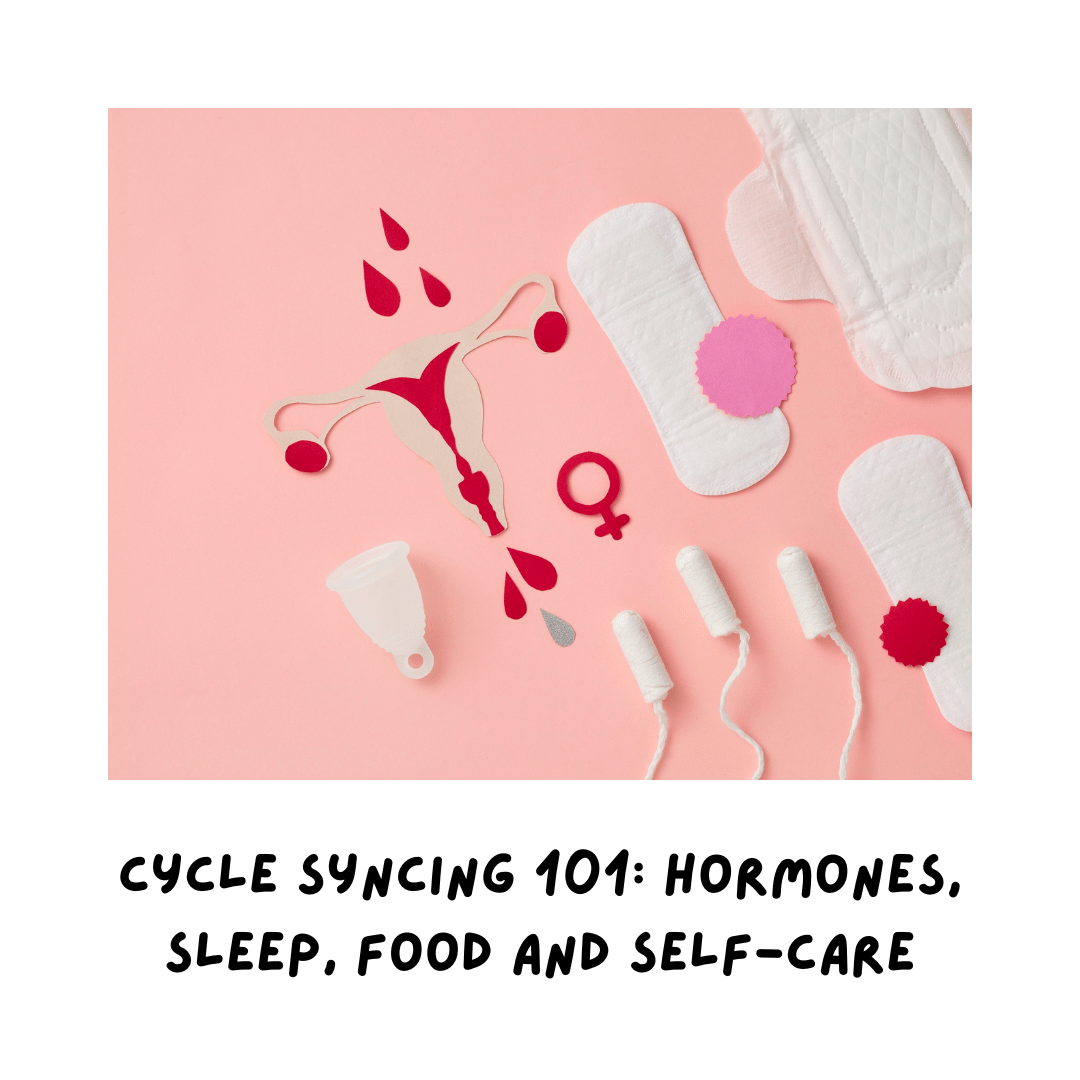

Many women notice that their energy, mood, focus, and even appetite change throughout the month. One week you may feel motivated, productive, and social, while another week you may feel tired, more emotional, or in need of quiet time. For many mothers, especially those already carrying the invisible load of family life, these shifts can feel confusing or frustrating. So this is why a cycle-syncing guide will give you a lot of knowledge at the end of the blog post.
There is one thing you need to know: the changes mentioned above are not random.
As a neuroscientist and a mother, I have spent years studying hormones and how they influence the brain, mood, and behavior. What I have learned both professionally and personally is that women’s bodies follow natural rhythms that deserve to be understood rather than ignored.
This is where cycle syncing becomes incredibly helpful. And even more, journaling your feelings and symptoms from month to month can change your whole day with time… because anticipation will do its job.
Cycle syncing is not about strict rules or complicated routines. Youd do not even need to remember everything if you journal your cycle/mood/feelings. Instead, it is about understanding how your hormones change during the menstrual cycle and gently adjusting your lifestyle—your sleep, food, movement, and self-care—to support your body in each phase.
For overwhelmed mothers, this perspective can be deeply reassuring. Instead of expecting yourself to feel the same every day, cycle syncing encourages you to work with your biology rather than against it.
Let’s begin by understanding what cycle-syncing actually means and how the menstrual cycle works. Here is your simple cycle-syncing guide.
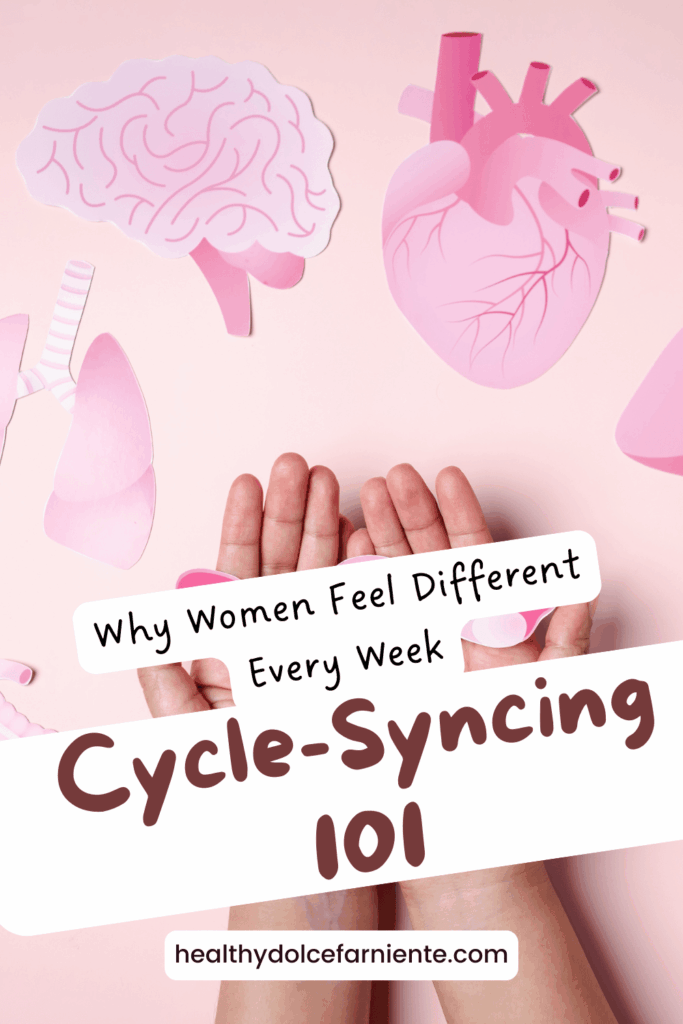
What Is Cycle Syncing?
Cycle syncing is the practice of aligning daily habits—such as nutrition, sleep, exercise, productivity, and self-care—with the four phases of the menstrual cycle.
Your first reaction: it is not even possible as a mom. Listen to me, as a mom of two with so little help, I know how a week can pass and you do nothing for yourself. I know how overwhelming motherhood can be.
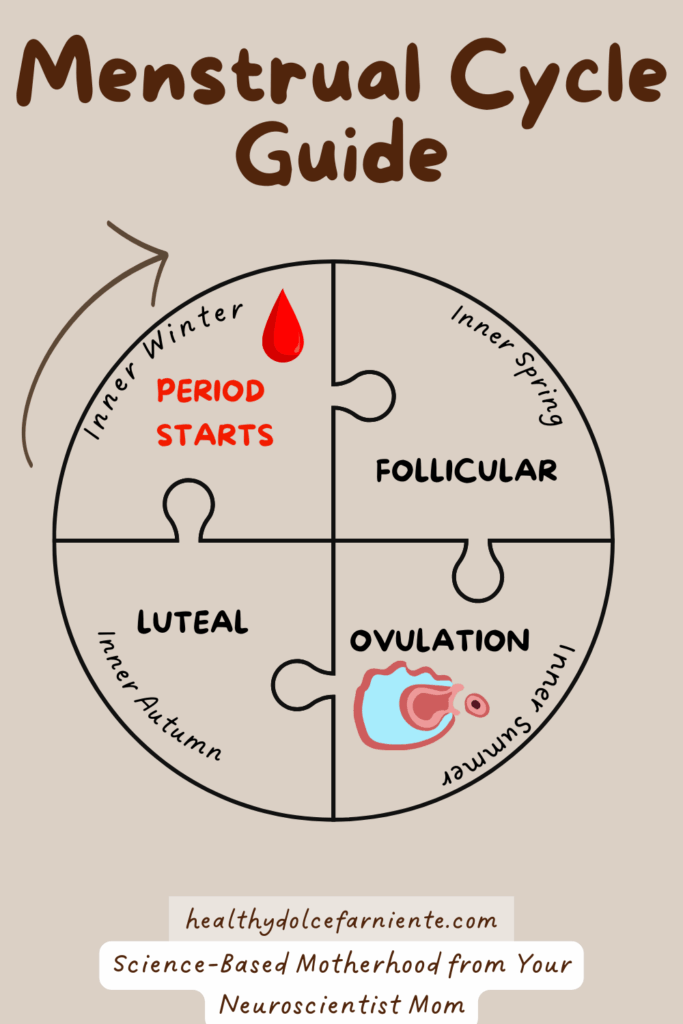
The menstrual cycle is regulated by a complex interplay of hormones, primarily estrogen and progesterone, along with signals from the brain involving luteinizing hormone (LH) and follicle-stimulating hormone (FSH). These hormones fluctuate naturally throughout the month and influence many aspects of a woman’s well-being (1).
For example, hormonal changes can affect:
- energy levels
- mood and emotional sensitivity (2)
- sleep quality (3)
- appetite and digestion
- stress resilience
- cognitive focus and creativity
Modern life, however, often expects women to function with the same level of productivity every single day. Work schedules, family responsibilities, and social expectations rarely acknowledge these natural fluctuations.
As a result, many women feel frustrated when their energy or motivation suddenly shifts.
But these changes are part of a healthy biological rhythm.
Cycle syncing simply encourages women to recognize these patterns and make small adjustments accordingly (and this is what I meant by cycle-journaling). For instance, you might prioritize rest during lower-energy phases, schedule demanding tasks when energy naturally rises, or adjust your food choices to support hormonal balance.
For busy mothers, cycle syncing does not need to be perfect. Even small changes—such as understanding why you feel more tired during certain phases—can reduce unnecessary self-criticism.
When women begin to understand their cycle, they often realize that their bodies are not unpredictable. In fact, they are incredibly consistent.
The Four Phases of the Menstrual Cycle
The menstrual cycle can be divided into four main phases, each characterized by distinct hormonal changes. Although every woman’s cycle is slightly different, the average cycle lasts about 28 days (but 25-30 days can be normal too, 1 (read the scientific paper)).
Understanding these phases can help women anticipate shifts in energy, mood, and physical needs.
The Menstrual Phase
The menstrual phase begins on the first day of bleeding and typically lasts between three and five days.
During this time, estrogen and progesterone levels are at their lowest. The body is shedding the uterine lining, which can lead to fatigue, reduced motivation, or a desire for quiet time.
From a neurological perspective, this phase often encourages introspection and slower activity. Many women find that their bodies naturally ask for more rest.
Instead of pushing through exhaustion, this phase may be an opportunity to prioritize gentle self-care, nourishing meals, and restorative sleep.
For mothers, this might simply mean allowing yourself to move a little slower when possible and not cooking every day. Or why not just sit and enjoy the sun while your kids play at the playground?
The Follicular Phase
The follicular phase begins after menstruation and continues until ovulation.
During this phase, estrogen gradually rises, which often leads to increasing energy, improved mood, and enhanced cognitive clarity. Estrogen supports the activity of neurotransmitters such as serotonin and dopamine, which can promote motivation and optimism.
Many women notice that this is a time when they feel more curious, creative, and open to new ideas.
From a practical perspective, this phase can be a good time to start new projects, try new activities, or tackle tasks that require mental focus.
The Ovulatory Phase
Ovulation typically occurs around the middle of the cycle. During this phase, estrogen reaches its peak, and the brain releases a surge of luteinizing hormone, triggering the release of an egg from the ovary.
Biologically, this phase is associated with higher levels of confidence, communication skills, and social energy. Research suggests that estrogen enhances certain cognitive functions, including verbal fluency and social engagement.
Many women report feeling more outgoing, productive, and emotionally balanced during this phase. For mothers juggling work, family, and personal responsibilities, this can often be the most energetic and socially active time of the month.
The Luteal Phase
After ovulation, the body enters the luteal phase, which lasts until the next menstrual cycle begins.
During this phase, progesterone becomes the dominant hormone. Progesterone has a calming effect on the nervous system and slightly raises body temperature. While some women remain stable during the early luteal phase, energy levels may gradually decrease as the cycle progresses.
It is also common for women to experience increased appetite, especially for carbohydrate-rich foods. This is partly due to metabolic changes and the body preparing for the possibility of pregnancy.
Toward the end of the luteal phase, some women may experience symptoms associated with premenstrual syndrome (PMS), including mood changes, fatigue, or irritability. Understanding that these changes are hormonally driven can help women respond with greater compassion toward themselves.
How Hormones Affect Mood, Energy, and Stress
Hormones influence the brain in powerful ways, particularly through their interaction with neurotransmitters such as serotonin, dopamine, and GABA (4).
Estrogen, for example, can support serotonin production and receptor sensitivity (5). This is one reason many women feel more emotionally resilient and optimistic during the follicular and ovulatory phases. Put simply, during your ovulatory phase, you really feel good, sexy, and happy.
Progesterone, on the other hand, interacts with GABA receptors in the brain, which can promote relaxation and calm. However, fluctuations in progesterone during the late luteal phase may contribute to mood sensitivity for some women, aka you may be crying because you saw a beautiful baby or a pregnant coworker. It is okay.
Stress hormones also play a role.
When life becomes overwhelming—as it often does in motherhood—the body produces cortisol, the primary stress hormone. Chronic stress, sleep deprivation, and the mental load of managing family life can amplify the effects of hormonal fluctuations.
For instance, a mother who is already tired and overstimulated may feel these shifts more strongly.
This is why understanding the hormonal rhythm of the menstrual cycle can be so empowering. It allows women to recognize that changes in mood or energy are often rooted in biology.
So you should ask yourself most often: “What phase of my cycle am I in, and what might my body need right now?”
Cycle Syncing and Sleep
One of the most overlooked aspects of cycle syncing is sleep. Many women notice that their sleep quality changes throughout the menstrual cycle, yet few understand why (3).
The answer lies primarily in progesterone and estrogen, two hormones that influence both the brain and the body’s internal clock.
During the follicular phase (after menstruation), when estrogen levels are rising, many women experience deeper sleep and wake up feeling more refreshed. Estrogen supports serotonin production and interacts with the circadian rhythm, which can help regulate sleep-wake cycles.
However, things often shift during the luteal phase (before menstruation), and the increased body temperature can sometimes disrupt sleep patterns. Some women experience lighter sleep, more frequent waking, or difficulty falling asleep during this phase.
For mothers who are already experiencing interrupted sleep due to children, these hormonal changes can feel especially intense.
Additionally, cortisol—the body’s primary stress hormone—can further interfere with sleep if the nervous system remains activated throughout the day. The mental load of motherhood, combined with hormonal fluctuations, can create a perfect storm for poor sleep.
However, cycle syncing offers simple strategies that may help.
For example, during the luteal phase, it may be helpful to:
- prioritize earlier bedtimes
- reduce caffeine intake
- create calming evening routines
- focus on warm, nourishing meals that support relaxation
During the follicular phase, when energy and alertness naturally increase, many women find it easier to wake earlier and feel more productive in the morning. Instead of fighting these changes, cycle syncing encourages women to adapt their routines gently throughout the month.
Sleep, after all, is not static. Just like hormones, it follows rhythms.
Cycle Syncing and Nutrition: What to Eat in Each Phase
Nutrition is another area where cycle syncing can offer meaningful support (6). While the body always benefits from balanced meals, hormonal shifts throughout the menstrual cycle can influence nutrient needs, appetite, and metabolism.
Understanding these changes can help women nourish themselves more effectively.
Menstrual Phase
During menstruation, the body sheds the uterine lining and loses small amounts of blood. As a result, many women feel tired or depleted.
This is a time when the body often benefits from iron-rich and mineral-rich foods, as well as warm, easy-to-digest meals. I always take organic magnesium during the luteal and menstrual phase, so check with your doctor to see if they can recommend you the same.
Helpful foods may include:
- leafy greens
- slow-cooked meats or legumes
- soups and broths
- eggs and nutrient-dense proteins
Warm foods can be particularly comforting during this phase because they support digestion and circulation. For busy mothers, this might simply mean choosing nourishing meals that feel grounding rather than restrictive.
Follicular Phase
As estrogen rises during the follicular phase (the phase after your menstruation), many women notice an increase in energy and mental clarity.
During this time, digestion often feels lighter, and the body may naturally crave fresh foods.
Helpful foods during this phase can include:
- fresh vegetables and salads
- lean proteins
- fermented foods that support gut health
- seasonal fruits
These foods support both digestion and the gradual rise in energy that occurs as ovulation approaches.
Ovulatory Phase
During ovulation, estrogen peaks, and the body is often at its most energetic and socially active.
This phase can benefit from foods that support liver detoxification and antioxidant balance.
Examples include:
- cruciferous vegetables (broccoli, cauliflower)
- berries
- healthy fats such as olive oil and avocado
- fiber-rich foods that support digestion
These foods help the body process hormones efficiently and maintain metabolic balance.
Luteal Phase
The luteal phase (before menstruation) is often the most challenging phase for many women. Progesterone rises, metabolism increases slightly, and the body prepares for a potential pregnancy.
As a result, appetite may increase, and cravings for carbohydrates may appear. Listen, if you can only do one thing for yourself, make sure it’s starting your day with a nourishing breakfast and never drinking coffee on an empty stomach.
This is not a lack of willpower. It is biology.
Supporting blood sugar stability during this phase can be especially helpful. Meals that combine protein, healthy fats, and complex carbohydrates may help reduce energy crashes and mood fluctuations.
Examples include:
- eggs with vegetables and avocado
- Greek yogurt with nuts and seeds
- nourishing leftovers from dinner
- warm stews and balanced meals
Magnesium-rich foods such as leafy greens, pumpkin seeds, and dark chocolate may also support the nervous system during this phase.
Self-Care and Lifestyle by Cycle Phase
Cycle syncing is not only about nutrition. Lifestyle choices—including exercise, work demands, and emotional self-care—can also be adjusted to support hormonal rhythms.
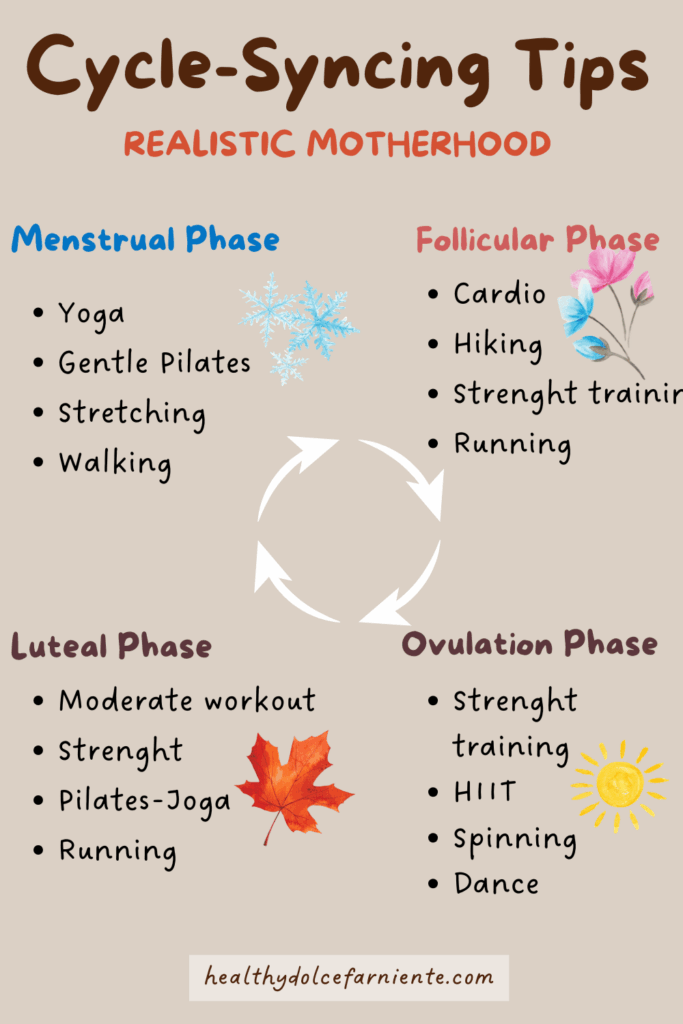
For overwhelmed mothers, the key is flexibility rather than perfection.
Menstrual Phase: Slow Down
During menstruation, the body may naturally ask for rest.
Self-care practices might include:
- gentle walks, maybe soft yoga or pilates
- journaling or reflection
- quiet evenings
- calming rituals, herbal teas to support your pain
This phase invites women to listen more closely to their bodies.
Follicular Phase: Create and Explore
With rising estrogen and increasing energy, this phase is often associated with creativity and curiosity.
Many women find it easier to:
- start new projects
- learn new skills
- plan upcoming tasks
This can be a good time to brainstorm ideas or explore new routines.
Ovulatory Phase: Connect and Communicate
During ovulation, social confidence often increases.
Women may feel more comfortable with:
- conversations and collaboration
- presentations or meetings
- social gatherings
This phase can be ideal for activities that involve communication or teamwork.
Luteal Phase: Organize and Protect Your Energy
As progesterone rises, many women begin to shift inward again.
This phase may be well suited for:
- organizing tasks
- completing projects
- focusing on practical work
However, it may also be helpful to reduce unnecessary commitments and protect energy when possible.
For mothers, this might simply mean recognizing when the body needs more structure and quiet time.
Cycle-Syncing in Real Life (Especially for Mothers)
At this point, many women ask an important question:
Is cycle-syncing realistic in everyday life—especially with children?
The short answer is yes, but not in the rigid way social media sometimes suggests. Oh no, because than this would be a new task on your list.
Cycle-syncing does not mean reorganizing your entire life around your menstrual cycle. Instead, it is about becoming aware of your body’s rhythms and making small adjustments when possible.
For example:
- During lower-energy phases, you might prioritize simpler meals and earlier bedtimes.
- During higher-energy phases, you may naturally feel more motivated to tackle bigger tasks, to cook complicated meals, or do a big cleaning.
- When emotional sensitivity increases, you might choose gentler self-care rather than pushing harder.
Motherhood is unpredictable. Children become sick, schedules change, and life rarely follows a perfect routine.
But even within that unpredictability, awareness can make a difference. Understanding the menstrual cycle can help mothers respond with greater compassion toward themselves.
Some ideas…
The female body operates according to natural rhythms. Hormones such as estrogen and progesterone influence sleep, energy, mood, digestion, and stress resilience throughout the month. Yet modern life often asks women to ignore these rhythms and maintain constant productivity.
Cycle syncing offers a different approach. By understanding the phases of the menstrual cycle and adjusting food, sleep, and lifestyle habits accordingly, women can support their hormonal health in a more balanced way.
For mothers especially, this knowledge can be empowering. You know, so you don’t feel like a bad mom even though it’s sunny outside, but you have zero energy to go to a playground.
When you understand your cycle, you begin to see that fluctuations in mood, energy, and appetite are not signs of weakness. They are simply part of your biology and as I say to my husband…well it is what it is.
Instead of fighting these changes, cycle syncing invites you to move with them.
And sometimes, the most supportive thing we can do for ourselves is not to push harder, but to listen more carefully to what our bodies and what cycle syncing are trying to tell us.