With Love, Katie.


In a world overflowing with quick fixes and synthetic solutions, you might wanna slow down a little bit and learn about the secrets of herbs, about how healing can be simple and sometimes made with natural herbs. For centuries, women and healers turned to the earth to soothe, strengthen, and nourish their bodies.
Today, we slowly remember what our grandmothers once knew: true health is holistic, rooted in nature, rhythm, and care, and so should you try to live a little bit closer to nature. Once I decided to live a simple motherhood, I realised how much herbs can help to bring us together: a good tea and a good talk, it is all we need on dark afternoons.
Here are 3+1 natural herbs that beautifully bridge the ancient and the modern, offering gentle, powerful support for body, mind, and spirit.
1. Turmeric (Curcuma longa)
Turmeric is one of the most powerful herbs in holistic health, cherished for centuries in both Ayurvedic and traditional Chinese medicine. Its active compound, curcumin, has strong anti-inflammatory and antioxidant properties, which can help reduce chronic inflammation, often linked to many modern illnesses.
Turmeric supports liver health, digestion, and even brain function, making it a valuable everyday tonic.
It’s often used to ease joint pain, support skin health, and protect against oxidative stress. When combined with black pepper (which contains piperine), its absorption and effectiveness increase significantly. You can enjoy turmeric in golden milk, curries, or wellness shots, making it both healing and versatile (1).
Key Properties
Turmeric’s active compound, curcumin, is a powerful natural anti-inflammatory agent, but it is also a great antioxidant: it helps neutralize free radicals, protecting cells from damage.
Turmeric stimulates bile production and soothes digestive issues. It is often used for easing joint pain and stiffness.
How to Use and Store
Its forms are present as fresh root, dried powder, capsules, tinctures, teas. Keep dried turmeric powder in a cool, dark place in an airtight container. Fresh root should be refrigerated and used within a week. Combine turmeric with black pepper for better absorption of curcumin.
Precautions
Just like any other natural herb, turmeric has some side effects to. In large amounts, turmeric can thin the blood, so if you are on blood thinners or preparing for surgery, consult your healthcare provider.
2. Ginger (Zingiber officinale)
Ginger is a warming, stimulating herb known for its incredible digestive and immune-supporting benefits. Rich in compounds like gingerol, it helps reduce nausea, bloating, and inflammation, making it a go-to remedy for everything from morning sickness to muscle soreness.
In holistic health practices, ginger is often used to support circulation, boost metabolism, and soothe cold and flu symptoms. It’s also believed to enhance nutrient absorption and balance the gut, which is central to overall well-being. Whether steeped as a tea, grated into food, or taken as a tonic, ginger adds both flavor and healing warmth.
Its natural spiciness not only invigorates the body but also clears mental fog and lifts low energy. A true kitchen staple, ginger is one of the most versatile and trusted herbs in natural wellness. (2).
Key Properties
Ginger promotes healthy digestion, eases nausea, and soothes stomach discomfort. Just like turmeric, it helps calm inflammation. It supports circulation and strengthens immunity, but can also ease menstrual cramps, headaches, and sore muscles.
How to Use and Store
Fresh root, dried slices, powder, capsules, teas, syrups – ginger has a lot of forms.
As for storage, keep fresh ginger in the refrigerator (wrap it in a paper towel inside a bag), and powder in an airtight container, away from moisture.
Make it part of your beautiful daily rituals, grate a thumb-sized piece, steep it in hot water, add lemon or honey and enjoy your slow sip.
Precautions
High doses may cause heartburn or stomach upset. Moderation is key, especially during pregnancy. Do not forget to consult with your healthcare provider.
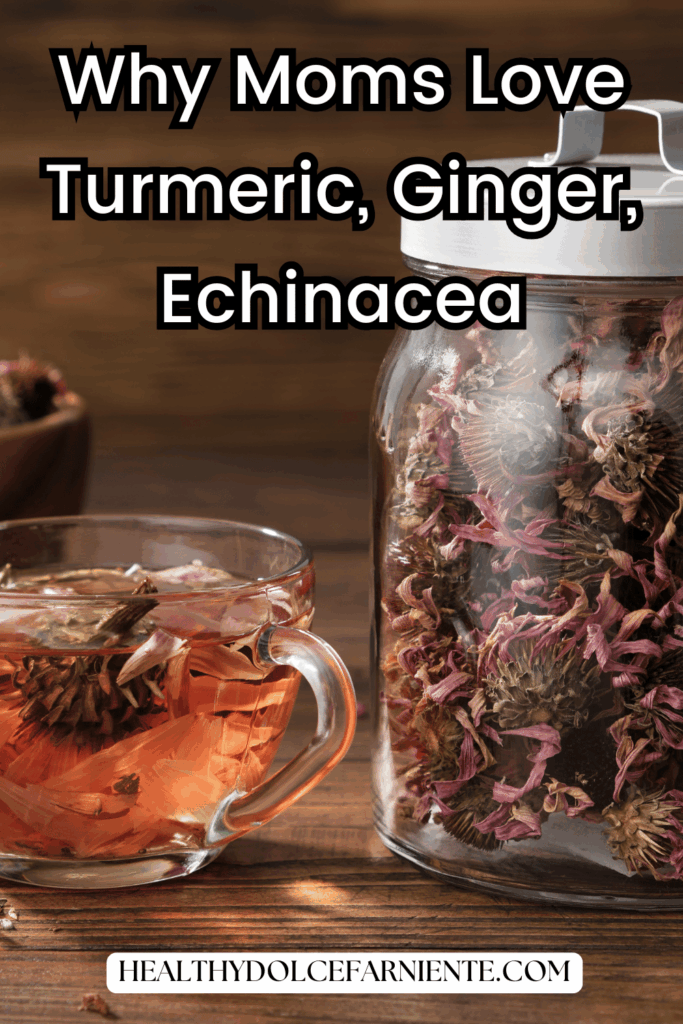
3. Echinacea (Echinacea purpurea)
Echinacea is a well-known immune-boosting herb, traditionally used to help the body fight off colds, flu, and infections. It contains powerful plant compounds, such as alkylamides, caffeic acid, and polysaccharides, that support white blood cell activity and help reduce inflammation.
Often taken at the first sign of illness, echinacea may shorten the duration and intensity of cold symptoms while also promoting resilience during seasonal transitions.
In holistic health, it’s considered a gentle yet effective adaptogen, helping the body manage stress while protecting against environmental threats. Beyond immunity, echinacea may also support skin health and wound healing thanks to its antibacterial and antiviral properties. Whether used as a tea, tincture, or capsule, it’s a reliable herbal ally for maintaining balance and defense. It’s best taken in cycles or during immune challenges, rather than continuously.(3).
Key Properties
Echinacea enhances the body’s natural defense mechanisms, but also may reduce the severity and duration of colds when taken at the first sign of symptoms. It is also helpful for soothing infections and minor wounds.
How to Use and Store
Echinacea it’s found mostly in two forms: dried flowers and roots, last one usually good for teas and tinctures. You can find echinacea in capsules and extracts too. Keep dried echinacea in airtight containers away from heat and light.
Echinacea works best when used at the onset of symptoms, not as a daily tonic.
Precautions
Some people may experience allergic reactions, especially if allergic to plants in the daisy family. Best avoided by individuals with autoimmune conditions unless guided by a practitioner.
+1. Holy Basil (Ocimum sanctum), also called Tulsi
Holy basil, or tulsi, is a revered herb in Ayurvedic medicine, known as the “Queen of Herbs” for its wide-ranging benefits. As a powerful adaptogen, holy basil helps regulate stress hormones like cortisol, supporting the nervous system and promoting emotional balance.
Its antioxidant and anti-inflammatory properties also make it a valuable ally for immune health and chronic inflammation. Tulsi has been traditionally used to enhance respiratory function, soothe digestive discomfort, and support mental clarity. Regular consumption—often as a calming tea—can create a grounding ritual that nourishes both body and mind.
It’s especially helpful during periods of emotional fatigue, overwhelm, or hormonal shifts. In holistic health, tulsi is celebrated not only for its physical benefits but also for its role in restoring a sense of inner peace and resilience (4).
Key properties
Holy basil works as an adaptogen, as it helps the body adapt to physical and emotional stress. It promotes emotional resilience and calmness. Supports the respiratory system and strengthens natural immunity.
How to Use and Store
Use fresh or dried leaves for tea. You can find Tulsi in tinctures and capsules. Keep dried Tulsi in an airtight container in a cool, dark place. Sip tulsi tea in the evenings to unwind and nourish your nervous system.
Precautions
Holy Basil is generally safe for most people, but it may lower blood sugar, so those with diabetes should monitor their levels carefully.
My Sidenote to You
Just because something is natural doesn’t mean it’s harmless: in either case, listen to your body, start small, and if you feel insecure, please consult with a practitioner. If you have underlying conditions or take medications, it is very important to see your healthcare provider.
Always choose organic, ethically sourced herbs to ensure purity and potency. Use what is good for you, not what is fancy.
Herbal healing works in harmony with your body’s natural rhythms. It may take time, but it builds strength at the roots, not just the surface.
Reconnect
In every cup of golden turmeric milk, in every sip of ginger tea, in every breath of tulsi steam, you are reconnecting with something ancient.
You are remembering that healing doesn’t always come in a bottle or a prescription, but you see, sometimes from patience, trust, and the gentle wisdom of the earth.
Natural herbs and holistic health isn’t a destination, but rather a daily return to nature.
Research
- Chattopadhyay, I., Biswas, K., Bandyopadhyay, U., & Banerjee, R. K. (2004). Turmeric and curcumin: Biological actions and medicinal applications. Current Science, 87(1), 44–53.
- Huijuan Li, Yanan Liu, Dan Luo, Yuzhen Ma, Jie Zhang, Meixuan Li, Liang Yao, Xiue Shi, Xingrong Liu, Kehu Yang,
Ginger for health care: An overview of systematic reviews, Complementary Therapies in Medicine, 45, 2019, 114-123,
ISSN 0965-2299 - Susan S Percival, Use of echinacea in medicine, Biochemical Pharmacology, Volume 60, Issue 2, 2000, 155-158