With Love, Katie.

Anxiety has quietly become one of the defining emotional experiences of the 21st century. For mothers, in particular, it often feels like a constant background hum — sometimes subtle, sometimes overwhelming.
While occasional anxiety is a normal biological response, chronic anxiety can erode joy, drain energy, and make motherhood feel heavier than it needs to be. The good news? There are natural, science-backed ways to calm the nervous system and restore balance.
This guide explores anxiety through the lens of modern motherhood — and offers practical, holistic tools to reduce it.
Anxiety in the 21st Century
We live in an era of unprecedented convenience and unprecedented stimulation.
Smartphones, 24-hour news cycles, social media comparison, economic uncertainty, and information overload keep our nervous systems in a near-constant state of alert. From an evolutionary perspective, the human brain is not designed for continuous exposure to perceived threats.
Anxiety is rooted in the fight-or-flight response, regulated by the sympathetic nervous system. When we perceive danger, the body releases cortisol and adrenaline. Heart rate increases. Muscles tense. Blood flow shifts toward survival systems.
In short bursts, this response is protective.
However, in modern life, perceived threats are rarely physical. They are psychological:
- Deadlines
- Financial pressure
- Parenting expectations
- Social comparison
- Health fears
- Endless notifications
When stress becomes chronic, cortisol remains elevated. Over time, this contributes to:
- Sleep disturbances
- Digestive issues
- Hormonal imbalance
- Mood instability
- Increased inflammation
Research in psychoneuroimmunology shows that chronic stress affects immune function, gut health, and even gene expression. Anxiety is not “just mental.” It is physiological.
And mothers are especially vulnerable.
Anxiety in Motherhood
Motherhood amplifies the stress response in unique ways.
Biologically, a mother’s brain is wired for vigilance. Studies using brain imaging show that postpartum women experience heightened activity in regions associated with threat detection and emotional processing. This supports bonding and protection — but it can also increase anxiety sensitivity.
Additionally, hormonal fluctuations play a major role. During pregnancy, estrogen and progesterone rise dramatically. After birth, they drop sharply — one of the most significant hormonal shifts a human body can experience. These changes directly affect neurotransmitters like serotonin and GABA, which regulate mood and calmness.
Add to this:
- Sleep deprivation
- Blood sugar instability
- Nutrient depletion (iron, magnesium, B vitamins)
- The invisible mental load
- Reduced community support
And the result is often chronic low-grade anxiety.
Unlike previous generations who raised children within a village structure, many modern mothers parent in relative isolation. They are expected to nurture, educate, emotionally regulate, cook, clean, manage schedules, and sometimes work professionally — all simultaneously.
The nervous system rarely gets a true break.
Therefore, supporting maternal mental health requires both biological and practical tools.
Natural Supplements To Support Your Well-Being
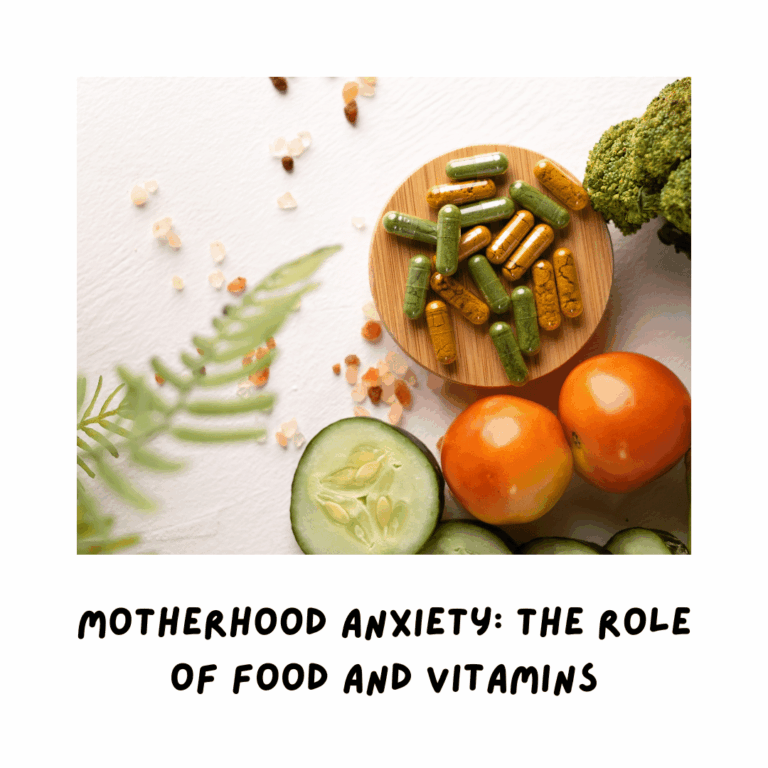
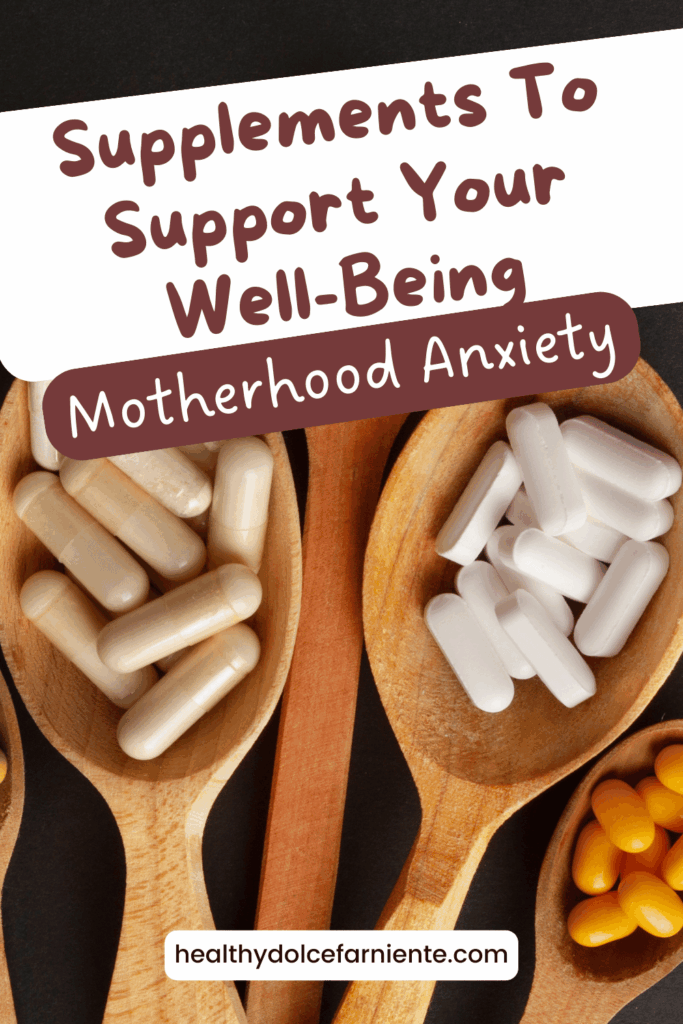
While food should always be the foundation, targeted supplementation can help replenish depleted nutrients and stabilize the stress response. Here are evidence-informed supplements that may support anxiety reduction:
1. Magnesium (Organic Forms)
Magnesium plays a critical role in nervous system regulation. It supports GABA receptors — the calming neurotransmitter pathway.
Organic forms such as magnesium glycinate, citrate, or malate are better absorbed than inorganic magnesium oxide. Magnesium glycinate is particularly supportive for anxiety and sleep because glycine itself has calming properties.
Chronic stress depletes magnesium rapidly. Supplementation can reduce muscle tension, improve sleep quality, and support emotional regulation.
2. Vitamin D
Vitamin D functions like a hormone and influences serotonin production. Low levels are strongly associated with mood disorders.
Mothers who spend much of their time indoors — especially during postpartum recovery — are at higher risk of deficiency. Testing levels and supplementing when needed can support mood stability.
3. Omega-3 Fatty Acids
Omega-3s, especially EPA and DHA, reduce inflammation and support brain cell communication.
Research suggests higher omega-3 intake correlates with lower anxiety symptoms. They also support postpartum recovery and cognitive function.
4. Vitamin C
Vitamin C supports adrenal function and helps regulate cortisol levels. During periods of high stress, the body uses vitamin C more rapidly.
It also functions as a powerful antioxidant, protecting the brain from oxidative stress.
5. L-Theanine
L-theanine, found in green tea, promotes relaxation without sedation. It increases alpha brain wave activity, associated with calm focus.
For mothers who feel “wired but tired,” L-theanine can gently take the edge off anxious tension.
!!! Before starting supplements, consult a healthcare provider — especially during pregnancy or breastfeeding.
Breathing Techniques to Reduce Anxiety
Breathing is one of the fastest ways to influence the nervous system.
When anxious, breathing becomes shallow and rapid, signaling danger to the brain. Intentional slow breathing activates the parasympathetic nervous system — the “rest and digest” state.
Below are three effective techniques.
The 4-4-4-4 Box Breathing
Also known as square breathing, this technique is used by athletes and even military personnel to maintain calm under stress.
How to practice:
- Inhale for 4 counts
- Hold for 4 counts
- Exhale for 4 counts
- Hold again for 4 counts
- Repeat for 4–6 cycles
Scientifically, this pattern slows heart rate variability and reduces cortisol levels.
For a mom, this can be done while sitting in the car, during bedtime routines, or even while holding a baby.
The 4-7-8 Breathing
This technique emphasizes a longer exhale, which strongly activates the parasympathetic response.
Steps:
- Inhale for 4 counts
- Hold for 7 counts
- Exhale slowly for 8 counts
Longer exhalation signals safety to the brain.
This is especially helpful before sleep, during nighttime anxiety, or after a stressful interaction.
The 3-3-3 Rule of Anxiety
The 3-3-3 rule grounds you in the present moment:
- Name 3 things you see
- Name 3 things you hear
- Move 3 parts of your body
Now let’s imagine a real motherhood moment. It’s late afternoon. You’re making dinner because everybody is hungry. Your husband is still at work, and you are tired af. One child is asking for snacks. The little one is crying. Your phone is buzzing, your husband thought he would call you right now… You feel your chest tighten and your thoughts spiral: I can’t handle this. This is too much.
Instead of reacting, you pause — even for 20 seconds.
3 things you see:
-
The wooden kitchen table
-
Your child’s blue cup
-
The sunlight coming through the window
3 things you hear:
-
The sound of the pot simmering
-
Your child’s voice
-
The hum of the refrigerator
Move 3 parts of your body:
-
Roll your shoulders back
-
Wiggle your fingers
-
Press your feet firmly into the floor
As you do this, your breathing slows naturally. Your brain shifts from imagined overwhelm to present reality. The nervous system receives a signal: Right now, I am safe.
The chaos may still be there — but you are no longer spiraling inside it.
For mothers, this technique works because it requires no privacy, no silence, and no preparation. You can do it in the kitchen, at the playground, in the car, or during bedtime.
Sometimes resilience begins with a 20-second reset.
Affirmations for Anxiety
While affirmations may sound simplistic, they can influence neural pathways over time. For me, affirmations were the last thing I wanted to believe in. However, now they are part of my journaling too.
Cognitive neuroscience shows that repeated thoughts strengthen neural connections. Anxious thinking reinforces fear-based circuits. Gentle, intentional affirmations can gradually build calmer pathways.
Effective affirmations for anxious mothers include:
- “I am safe in this moment.”
- “My body knows how to calm itself.”
- “I can handle one thing at a time.”
- “I do not have to solve everything today.”
- “It is okay to rest.”
- “My worth is not measured by productivity.”
The key is repetition during calm moments — not just during crisis.
Writing affirmations on sticky notes, placing them near the sink or bedside table, can subtly reinforce safety cues.
Bringing It All Together
Anxiety in modern motherhood is not a personal failure. It is a predictable response to biological shifts, cultural isolation, overstimulation, and chronic responsibility.
However, mothers are not powerless. By supporting the body through nutrition and supplementation, calming the nervous system through breathing, grounding the mind with practical tools like the 3-3-3 rule, and reshaping internal dialogue through affirmations, anxiety can become more manageable.
Small daily practices create cumulative resilience. Motherhood may be intense — but with the right support, it does not have to be overwhelming.