With Love, Katie.

If you’ve ever found yourself scrolling Pinterest or Instagram late at night, saving images of perfectly curated playrooms, spotless kitchens, and beautifully dressed toddlers who apparently never spill yogurt down their shirts, let me just say: same. I genuinely love seeing the perfect nurseries all clean, neutral, aesthetically balanced or the Instagram feed of some hot, very Insta-compatible moms who somehow look put-together while raising small humans and coordinating Montessori-level sensory activities in matching linen sets.
It’s comforting and aspirational and oddly soothing to look at. It whispers, “Life could look like this. Motherhood could look like this.” And while there is nothing inherently wrong with that whisper, there’s a problem when it becomes an expectation we’re supposed to fulfill. And a lot of us have no resources, support systems, or context that those moms actually have behind the scenes.
What if the pursuit of the perfect lifestyle isn’t helping moms… but quietly making motherhood harder? Let’s see some realistic stories about motherhood here.
The Modern Mom Lifestyle Trap
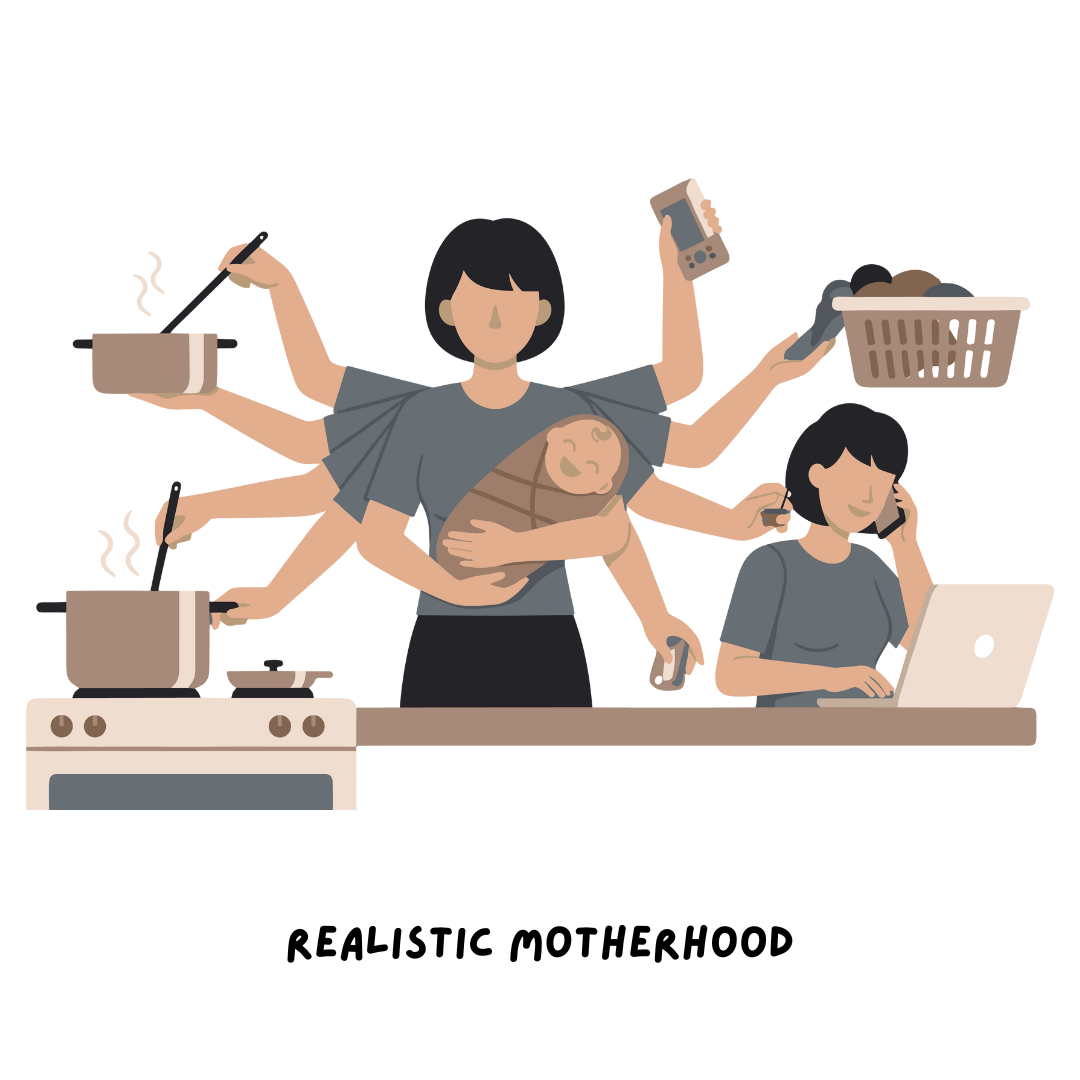
There’s a specific kind of pressure that mothers experience in the digital age, one that previous generations didn’t encounter. It’s not only the pressure to raise happy, healthy kids. It is also the pressure to curate a brand around motherhood itself. Today, motherhood is expected to be maternal, nurturing, organized, efficient, toxin-aware, emotionally regulated, fashion-conscious, gluten-savvy, Montessori-informed, and camera-ready. And that’s before anyone even mentions school lunches.
Moreover, there’s the culture of comparison. We no longer compare ourselves to the moms on our street or at school pickup…oh no! Now, we compare ourselves to the entire global archive of moms. You know, the ones who have the time, childcare, lighting, and resources to produce content about their lifestyle.
But here’s where it gets interesting: even the influencers we compare ourselves to aren’t doing it alone.
For example, I really love Lauren Simpson (now Carroll ). She’s a very rich, beautiful, hot, and fitness-loving momma who openly shares her reality. I loved her transparency and how she would write about how hard it was postpartum and how they had a nanny to keep everything together. That part is so important.
She never pretended she was doing motherhood, business, fitness, content creation, self-care, marriage, and domestic labor entirely on her own. And honestly? That honesty is rare and refreshing.
Because when you pull back the curtain just a little, you start to realize: what looks like a perfect lifestyle is often a team effort, not a solo performance.
Why the Perfect Lifestyle Feels So Appealing
Now, before we go any further, it’s important to say this: the desire for beauty, order, and aesthetic harmony is not the problem. In fact, it makes perfect sense. When you’re a mom, your environment is constantly shifting, noisy, chaotic, and unpredictable. Therefore, seeing a photo of a calm, beautiful space feels like a balm to the nervous system. It gives us a glimpse of control in a life stage that often feels the opposite.
Besides that, aspiration is fun. It’s a way of imagining a slightly softer version of reality. It’s why we save recipes we won’t cook for five years and pin organization systems we secretly know our kids will dismantle in twelve minutes. Aesthetics promise ease, and ease is something mothers crave almost as deeply as sleep.
So the appeal makes sense. Yet, simultaneously, there’s a turning point.

The Hidden Costs of Chasing Perfection
This is where the perfect lifestyle flips from aspirational to unsustainable. In theory, perfection is calming. In practice, it is exhausting — because perfection has to be continually achieved. Moreover, perfection doesn’t account for toddlers, neurodivergent children, unexpected illnesses, sleep regressions, teething, weather, laundry, snack schedules, or days where everyone collectively loses their minds for no apparent reason.
When moms chase perfection, several things happen:
1. Cognitive Load Goes Up
Perfection demands constant decision-making:
Should I buy organic? Should I switch to non-toxic? Is lemon water detoxifying or problematic? Should their toys be wood? Is screen time ruining their frontal cortex? Did I just set them up for lifelong attachment issues because I said “no” too loudly?
It’s endless, and it’s mentally expensive.
2. Emotional Stress Rises
Because perfection has no finish line, mothers often feel like they are failing even when they’re doing an extraordinary job. This leads to guilt, resentment, anxiety, and shame, all of which are ironically the opposite of what a perfect lifestyle promises.
3. Physical Burnout Appears
With every effort to maintain the perfect home-cooking-healthy-schedule-balanced-career-fit-body-peaceful-motherhood formula, exhaustion creeps in: first subtly, then aggressively.
And as we talked about in the previous post, exhaustion changes everything: how we eat, how we parent, how we cope, and how we show up.
4. Presence Decreases
Perhaps the saddest cost of all is that while moms are busy performing motherhood, they often lose the lived experience of motherhood. Perfection demands attention, and attention is a finite resource. Kids don’t need perfect; they need you to be present.
The Invisible Labor Behind the Perfect Lifestyle
Finally, we have to talk about the invisible labor, the part that Instagram doesn’t show. Behind every curated lifestyle are micro-tasks and logistics that rarely get named:
- planning meals
- scheduling appointments
- restocking snacks
- researching enrichment
- tracking milestones
- managing laundry
- managing emotions
- monitoring sleep
- packing bags
- anticipating needs
- forecasting meltdowns
- mediating conflict
- remembering birthdays
- answering questions
- cleaning crumbs
- cleaning more crumbs
- more crumbs after that
Please, please, read this book: Releasing the Mother Load: How to Carry Less and Enjoy Motherhood More .
Erica will show you what realistic motherhood is. It is astonishing how much cognitive labor motherhood requires even on a “normal” day. And when you layer perfection on top of that, the workload becomes superhuman.
What Actually Works Instead
So if the perfect lifestyle is unsustainable (and honestly, unnecessary), what actually makes motherhood feel lighter, calmer, and more livable? The short answer: support, not performance. The longer answer: systems, rhythms, defaults, and margin.
The perfect lifestyle demands that mothers optimize everything. A supportive lifestyle asks a very different question: Does this make my life easier?
Let’s look at a few areas where that shift changes everything and just be honest with yourself: realistic motherhood is messy, somtimes is hard. But these things will definitely help you.
Good Enough > Perfect
In psychology, there’s a concept called the “good enough parent”, and it’s not about mediocrity. It’s about attunement. The idea is that children don’t need flawless parenting; they need consistent connection, safe boundaries, repair when things break, and a caregiver who is responsive more often than not.
Aesthetic perfection? Irrelevant for them. Organic snacks? Truly irrelevant (and no, I did not say to give them chocolate every day). Matching outfits? Why?
Good enough parenting focuses on resilience, not performance. It creates space for real life to happen, for mistakes to be made, and for kids to see how repair and regulation work in practice.
Rhythms > Rigid Routines
The perfect lifestyle loves routines because they look great on paper and photograph beautifully. However, real family life is more jazz than classical music, flexible, responsive, and occasionally chaotic.
Rhythms are predictable patterns that guide the day without demanding perfection. For example:
- morning rhythm: some dance alone + breakfasts (rotate, rorate…!) + backpacks
- evening rhythm: dinner + reset + pyjamas + stories
- weekly rhythm: grocery day + laundry day + taco night
Rhythms support the nervous system, especially for kids. And for moms, they eliminate one of the heaviest forms of mental load: constant future-planning.
Defaults > Decisions
One of the most supportive choices a mother can make is to stop reinventing the wheel. Defaults reduce decision fatigue at scale.
Examples of defaults that change everything:
- default breakfasts (3 options max 4, rotate them, add oats on the weekends), aka realistic motherhood
- default dinner rotations (5 meals on repeat)
- default snack bins
- default birthday gifts for classmates
- default cleaning rhythms (let them help you)
Are these sexy? Not at all, sir. But are they life-giving? Yes madam.
Is having a default birthday gift for classmates a form of maternal genius? Absolutely.
Margin > Optimization
Margin is where life breathes. It’s where imagination happens, where siblings become allies instead of rivals, and more importantly, where moms can sit down without collapsing.
Margin is also where we remember who we are outside of logistics.
If you’ve ever had a moment in the car or shower where your brain finally had space to think about something other than groceries or pediatrician appointments, you’ve tasted margin.
Small Shifts That Make Real Life Easier
Here are a few tiny changes mothers make that instantly reduce overwhelm without requiring a personality transplant. Simple things that simplicity can help you with on hard days.
- Repeating dinner themes
(tacos, pasta, soup, breakfast-for-dinner, sheet pan night) - Putting snacks where kids can reach them
(eliminates 45 snack requests per day) - Creating a family “launch pad”
(backpacks + shoes + keys in one spot) - Choosing good enough cleaning strategies
(wipes instead of systems, done instead of perfect) - 10-minute evening resets
(resentment prevention for things as tidying) - Lowering standards for folded laundry
(or skipping folding sometimes, you can literally live from the clothes dryer sometimes.) - Letting kids get bored
(let them.. then they will get creative with time)
None of these is a grand lifestyle overhaul. They’re just exits from performance culture.
If you liked this list, please make sure you read this too: How to simplify life as a busy mom
Reframing Motherhood Success
Before we wrap up, here’s a question that might sting (in a good way): When did motherhood become a performance instead of a relationship?
Somewhere along the way, we shifted from presence to presentation, which is clearly not part of a realistic motherhood . However, here’s the thing — kids don’t care about presentation. They don’t even see it. They care about the stuff we can’t post: tone of voice, patience, repair after conflict, cuddles, laughter, attention, and a mom who likes them.
Success in motherhood is not being aesthetic, efficient or optimized.
Success is being supported, relational, resilient and humane. If anything, the perfect lifestyle pulls us away from what makes motherhood meaningful.
Realistic motherhood and some personal touch
So, circling back to where we began, maybe the perfect lifestyle doesn’t work for moms, not because we’re failing, but because it was never designed to support real mothers in the first place.
In fact, maybe motherhood gets easier the moment we stop trying to perform it and start allowing ourselves to live it.
Therefore, here’s your final reflection for today: Where are you performing motherhood instead of experiencing it?
If that question sits with you in your ribs a little, yes, that means it’s working.
So if this resonated, save it for later (especially for the days that feel impossibly heavy), send it to another mom who might need permission to step out of the performance, and come back soon.
We are just getting started, as we all need to see what realistic motherhood is, and I am here to make life simpler, softer, and more supportive for busy moms, one gentle shift at a time.