With Love, Katie.
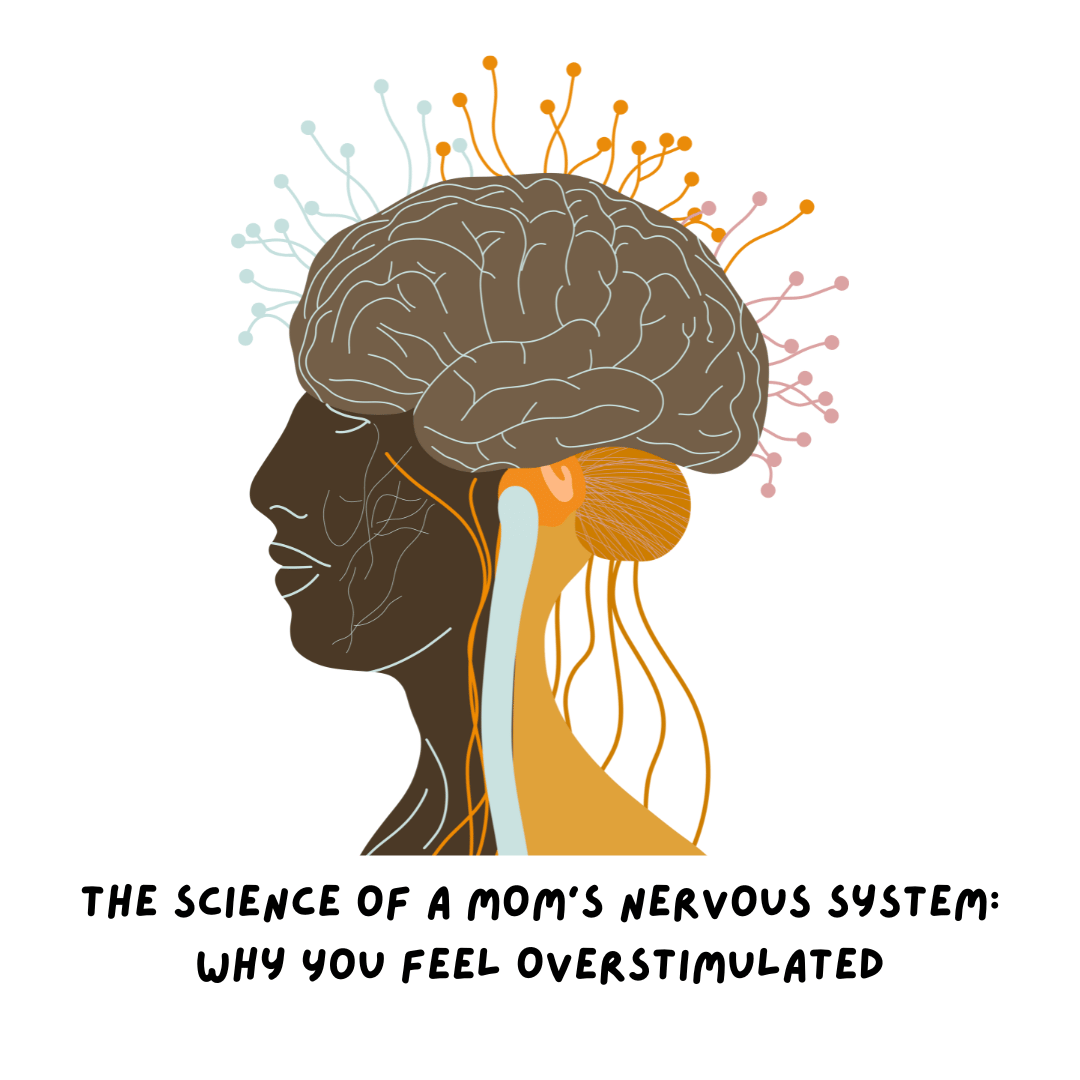

Motherhood can feel like living in a constant state of alert. The noise, the touch (hello overstimulation…), the emotional needs, the invisible planning, all the invisible labor of motherhood, well it all adds up. Many moms describe feeling overstimulated, exhausted, or “on edge” without always knowing why. So here is a little summary of a mom’s nervous system.
Before we go any further, I want to share something personal: I have a PhD in neuroscience. I genuinely find every neuron, every synapse, and every tiny electrical signal in the brain fascinating. The fact that our brains can store memories, regulate emotions, and adapt to constant change is nothing short of incredible.
That said, I promise not to turn this into a complicated science lecture. Although the nervous system is complex, understanding it doesn’t have to be hard. My goal here is to keep things simple, practical, and useful, especially for tired moms who don’t need more information overload, but rather clarity and support.
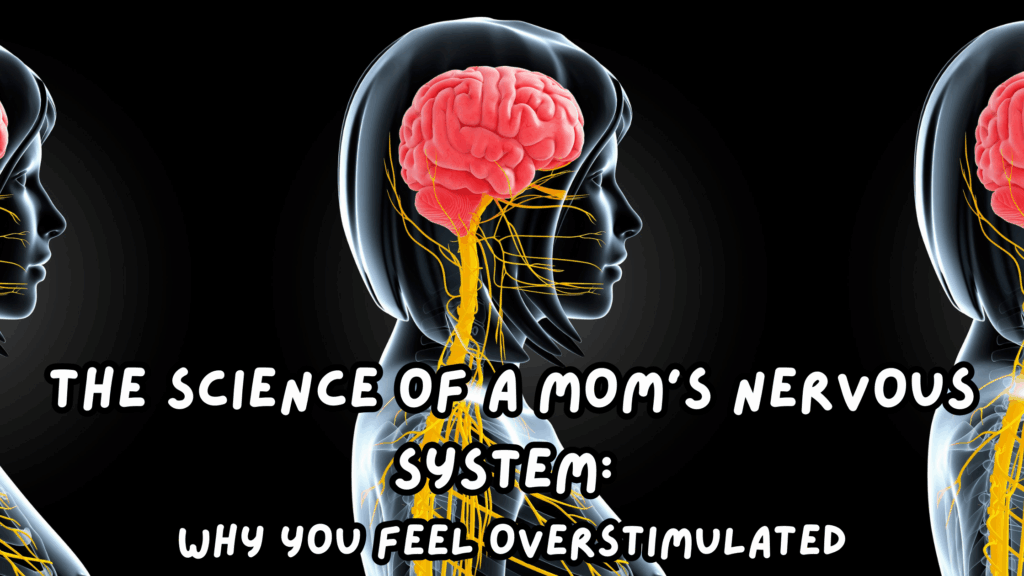
Let’s begin by looking at what the (mom’s) nervous system actually does in everyday mom life and why motherhood places such a heavy load on it.
Some personal notes
I find it so interesting that we moms know so much about our children’s nervous systems. Just these days I realized how important it is to give them wings so they can fly. In a very real sense, this means supporting them and letting them discover the world, even if sometimes we don’t like what path they choose: a dirty puddle right after kindergarten…(hello spring, hello rain). These “wings” help them develop a healthy nervous system. As mothers, we see how important it is to give our children opportunities to grow, to explore safely, to try new things, to get dirty, to make them look brave, and to get to know different terrains. I am a very outdoorsy mom; however, I get you if you like simply playing with Legos all day and reading book after book.
But let me tell you something: it is very important for your nervous system to get some fresh air, even if it is a little rainy outside. Free play, outside, jumping in the puddles or just counting wet leaves, sticks, and stones, is just as important as reading/playing indoors. There is this Hungarian saying: dirty kiddo, happy kiddo. I hope you get me.
Now, back to our nervous system, which is just as important as your baby’s overall healthy well-being:
1. A Mom’s Nervous System and Its Role
Your nervous system is the command center behind how you respond to the world (1). It regulates stress (2, which is so present lately in our lives), relaxation, attention (“mom, look here; mom, look there; mom, come here blabla”), emotions, digestion, and even how safe or overwhelmed you feel in your own body. In simple terms, it’s constantly scanning your environment and asking: Am I safe right now?
When the nervous system perceives safety, it allows you to rest, digest, connect, and think clearly. However, when it perceives a threat, and “threat” can mean noise, chaos (literally, your everyday life with toddlers), constant demands, or lack of rest, it shifts into survival mode.
Here’s where motherhood comes in.
Modern motherhood places women in near-constant nervous system activation. There are frequent interruptions, emotional caregiving demands, multitasking, and a lack of true downtime. Even when there is no immediate danger, the nervous system can remain stuck in a low-grade state of alertness. Over time, this creates chronic stress.
As a result, many moms experience:
- feeling overstimulated by noise or touch… (do you know that feeling when you are tired af and your hubby touches you, and you might even be sensitive cuz your menstrual phase is coming?)
- irritability or emotional overwhelm
- difficulty relaxing, even when there is “time”…
- fatigue that doesn’t go away with rest
Importantly, this is not a personal failure. It’s a biological response to prolonged stimulation and responsibility. Understanding this alone can remove a layer of guilt. Instead of asking, “Why can’t I handle this better?” a more compassionate question is, “What does my nervous system need right now?”
2. How Women’s Nervous Systems Differ From Men’s (Especially in Motherhood)
Although all human nervous systems operate through similar biological pathways, women’s nervous systems are shaped differently by hormones, reproductive cycles, and social roles, especially during motherhood.
Estrogen and progesterone, for example, influence how the brain processes stress. These hormones interact with cortisol (the stress hormone) and can make women more sensitive to emotional and sensory input at certain times of the month. This means that a mom’s capacity to handle stress can fluctuate. Kind reminder: not because she is inconsistent, but because her biology is dynamic.
In addition, women are often more emotionally attuned to others. This emotional attunement is a strength, but it also places an additional load on the nervous system. Many moms unconsciously regulate not only their own emotions, but also the emotional states of their children, partners, and even extended family members. Over time, this “holding” role can become neurologically exhausting.
So yeah, having a mom’s nervous system, it is not easy at all.
Furthermore, mothers often carry the invisible mental load of planning, remembering, anticipating, and organizing. The nervous system does not differentiate between physical danger and emotional or cognitive overload. Both activate stress responses.
Therefore, when moms feel depleted, it’s not because they are weak. It’s because their nervous systems are doing an extraordinary amount of unseen work.
3. The Gut–Brain–Nervous System Connection
To understand why stress in motherhood often shows up as digestive issues, fatigue, or anxiety, we need to talk about the gut–brain axis (3).
The gut and the brain are in constant communication through a network of nerves, hormones, and immune signals. One of the most important players in this communication is the vagus nerve. The vagus nerve acts like a two-way highway, sending information from the gut to the brain and from the brain to the gut.
When the nervous system is dysregulated, aka it’s stuck in stress mode, digestion is one of the first functions to be affected. This is because the body prioritizes survival over digestion. As a result, moms may experience:
- bloating
- stomach discomfort
- irregular digestion
- food sensitivities
- cravings for quick energy (sugar, caffeine)
At the same time, poor gut health can send stress signals back to the brain, increasing feelings of anxiety, irritability, or emotional instability. This creates a feedback loop between the nervous system and the digestive system.
The good news is that supporting one supports the other. When the nervous system is soothed, digestion improves. Likewise, when the gut is nourished, the nervous system becomes more resilient. This is why practices that calm the nervous system, such as gentle movement, breathing, and nourishing foods, often improve both emotional well-being and physical symptoms.
4. Signs Your Nervous System Is Overloaded
One of the most harmful beliefs many moms carry is that something is “wrong” with them. When exhaustion lingers, irritability rises, and motivation drops, it’s easy to internalize these experiences as personal failure. However, from a nervous system perspective, these are not signs of brokenness, they are signals.
Your nervous system communicates through sensations, emotions, and physical symptoms. When it becomes overloaded, it doesn’t send a neat message. Instead, it speaks through patterns that can feel confusing or frustrating.
Fatigue
Constant fatigue, even after rest is one of the most common signs. This kind of tiredness isn’t solved by one good night of sleep. It’s often the result of prolonged nervous system activation, where your body has been in “on” mode for too long without sufficient safety signals.
Overstimulation
Feeling overstimulated by noise or touch is another key indicator. When the nervous system is overwhelmed, sensory input that once felt neutral can suddenly feel unbearable. Loud sounds, children touching you, or constant interruptions can trigger irritation or shutdown. This isn’t a lack of patience (which is okay a lot of times), it’s a sign that your sensory threshold has been exceeded.
Irritability
Irritability or emotional numbness can also emerge. Some moms feel constantly on edge, snapping at small things. Others feel disconnected, flat, or emotionally distant. Both responses are forms of nervous system protection. One is hyperactivation, the other is shutdown.
No sleep
Sleep difficulties often appear when the nervous system cannot fully downshift into rest mode. Trouble falling asleep, staying asleep, or waking up unrefreshed can all indicate that your body doesn’t feel safe enough to fully relax.
Gut problems
Digestive issues are another common sign. Because digestion is regulated by the parasympathetic (rest-and-digest) branch of the nervous system, chronic stress often leads to bloating, irregular digestion, or stomach discomfort. Finally, sugar or caffeine cravings are often misunderstood as lack of discipline. In reality, these cravings can be the nervous system’s attempt to find quick energy or stimulation when it’s depleted. Sugar and caffeine temporarily activate dopamine and adrenaline — offering short-lived relief in moments of fatigue or emotional overload.
5. Nervous System Care Routines for Moms
Supporting the nervous system doesn’t require dramatic lifestyle changes. In fact, small, consistent practices are often the most effective. The goal isn’t to “fix” yourself — it’s to create enough signals of safety that your body can slowly shift out of survival mode.
Nourishment and Minerals
The nervous system relies on minerals and stable blood sugar to function well. When the body is undernourished or fluctuating between blood sugar highs and crashes, stress responses increase.
Magnesium-rich foods and supplements are particularly helpful. Magnesium supports muscle relaxation, nerve signaling, and sleep quality. Foods like leafy greens, seeds, nuts, cacao, banana and legumes naturally support magnesium levels. Some moms also benefit from supplementation, especially during periods of high stress. I always have organic magnesium during my menstrual phase; this works for me. Make sure you know your body.
Blood sugar stability is another powerful regulator. Skipping meals or relying heavily on refined carbs can cause energy crashes that stress the nervous system. Regular meals with protein, healthy fats, and complex carbohydrates provide steadier fuel and help reduce anxiety-like symptoms. Listen to me, you do not start your day with coffee. Eat a good, nourishing breakfast first.
Hydration and mineral balance also matter. Dehydration increases cortisol and can worsen fatigue, headaches, and irritability. Adding mineral-rich fluids (such as mineral water or a pinch of salt in water) can gently support nervous system resilience.
Movement as Regulation
Not all movement is regulating. While high-intensity workouts can be beneficial for some, they can further stress an already overloaded nervous system if used excessively.
Gentle movement such as walking, yoga, stretching, and dancing tends to be more supportive for tired moms. These forms of movement encourage circulation without activating fight-or-flight responses.
Rhythmic movement, in particular, calms the nervous system. Walking, swaying, rocking, or slow dancing activates patterns of motion that the nervous system associates with safety and regulation. This is one reason rocking calms babies — and adults, too.
Movement doesn’t have to be long to be effective. Even a five-minute walk or gentle stretch can send calming signals to your nervous system.
Sensory Regulation
The nervous system processes the world largely through sensory input. Therefore, adjusting sensory environments can be a powerful form of regulation.
Essential oils such as lavender, frankincense, and citrus can gently influence emotional states through the limbic system. Inhaling calming scents can cue the body toward relaxation (4).
Warm baths, self-touch, and temperature contrast also support regulation. Warmth signals safety. Gentle touch releases oxytocin, which counteracts stress hormones. Alternating warm and cool water can stimulate vagal tone and help the nervous system reset.
Soft lighting and sound matter more than we realize. Harsh lighting and constant noise keep the nervous system in alert mode. Dimming lights, playing soft music, or creating quiet pockets during the day can support nervous system downshifting.
Emotional Processing
Emotions are not separate from the nervous system; they are expressions of it. Creating small, consistent practices for emotional processing helps prevent emotional buildup from becoming chronic stress.
Simple journaling prompts can be powerful:
- What am I proud of today?
- What am I grateful for today?
Practicing gratitude is not about toxic positivity. Neurologically, gratitude shifts attention toward safety and resource recognition, which increases vagal tone and parasympathetic activation. Over time, this helps train the nervous system to notice moments of safety even during difficult seasons. Make sure you try journaling.
6. Nervous System Regulation vs. Nervous System Reset
It’s important to distinguish between nervous system regulation and nervous system reset, because both are necessary, but they serve different purposes.
Regulation refers to daily micro-support. These are small practices that help your nervous system stay within a manageable range throughout the day. Examples include:
- pausing for deep breaths
- eating nourishing meals
- gentle movement
- moments of sensory comfort
Regulation is preventive. It helps reduce stress buildup before it becomes overwhelming.
Reset, on the other hand, involves deeper downshifting from chronic stress. This is often needed when the nervous system has been overloaded for long periods. Reset practices may include:
- longer periods of rest
- intentional breathwork
- time in nature
- extended quiet time
Reset is reparative. It allows the nervous system to recalibrate after prolonged activation.
Importantly, regulation and reset are not competing approaches. They work together. Daily regulation prevents overwhelm from accumulating, while periodic reset allows deeper recovery.
For moms, this distinction is liberating. You don’t need a full retreat to support your nervous system and you also don’t need to rely only on tiny moments when you’re deeply depleted. Both are necessary and can exist in real life.
7. The Nervous System ABC: Alignment, Body Balance, Connection
Once you begin to understand your nervous system, it becomes clear that regulation isn’t about one perfect routine. It’s about creating conditions that help your body feel safe enough to soften. One simple framework I often return to is the Nervous System ABC: Alignment, Body Balance, and Connection.
A – Alignment
Alignment is about living in a way that matches your actual capacity, not the expectations placed on you.
Many moms push themselves beyond what their nervous systems can realistically sustain. Alignment asks gentle questions:
- Does my pace match my energy?
- Are my commitments aligned with my current season of life?
- Am I trying to live as if I have more resources than I actually do right now?
Alignment doesn’t mean doing less because you’re failing. It means honoring that different seasons of motherhood require different rhythms. When your lifestyle aligns with your nervous system’s capacity, your body doesn’t have to stay in survival mode to keep up.
B – Body Balance
The nervous system is not separate from the body — it is embedded within it. Therefore, care for the nervous system must include physical balance.
Body balance includes:
- consistent sleep rhythms, respecting circadian rhythms, aka circadiam rhytm matters more than you think for your happiness
- regular nourishment
- hydration and mineral support
- gentle movemen
When basic physiological needs are neglected, the nervous system compensates with stress responses. Supporting the body creates a foundation of safety. This doesn’t require perfection. It requires enough consistency to signal stability.
Think of body balance as the baseline support your nervous system needs to function without constant alarm.
C – Connection
The nervous system is deeply relational. We regulate not only through individual practices, but also through co-regulation with others.
Connection can take many forms:
- safe relationships
- physical touch
- eye contact
- shared laughter
- being emotionally seen
Moms often carry the emotional weight of entire households. Yet, the nervous system heals through mutual support. Feeling understood, heard, and emotionally safe allows the nervous system to downshift out of a defensive state.
Connection doesn’t have to be constant or intense. Even small moments of genuine presence: a shared laugh, a quiet conversation, a hug from your partner, can create powerful regulatory effects.

8. Feminine Rituals for Nervous System Healing
Beyond practical routines, many women find deep healing through feminine, cyclical rituals that reconnect them with their bodies rather than pushing through them.
These rituals aren’t about spiritual performance. They’re about creating gentle, embodied moments of safety.
Some examples include:
- honoring menstrual cycles and energy fluctuations
- slow tea rituals
- warm baths
- self-massage with oil
- moon or seasonal rituals
- creative expression such as journaling, singing, or art
Rituals create rhythm. Rhythm creates safety. And safety is the foundation of nervous system regulation.
You might also consider vocal practices like humming, chanting, or singing. These stimulate the vagus nerve and create vibration in the chest and throat, which helps signal safety to the nervous system. Similarly, rhythmic practices such as slow drumming or gentle rocking can create grounding patterns the body recognizes as regulating.
These rituals don’t need to be elaborate. What matters is consistency and intention. Even two minutes of intentional presence can shift your nervous system more than an hour of forced “self-care.”
10. You Are Not Too Sensitive
If motherhood has left you feeling overstimulated, depleted, or emotionally stretched, it’s not because you’re failing. But rather it’s because your nervous system is responding to real demands.
Understanding the science of your nervous system doesn’t pathologize your experience, but it validates it. You are not too sensitive. You are a human nervous system living in a world of constant stimulation, responsibility, and emotional labor.
The work of caring for the nervous system is not about becoming calmer overnight. It’s about slowly creating conditions of safety, alignment, and connection that allow your body to remember that it is not in danger.