With Love, Katie.


Motherhood is a journey of love, transformation, and deep emotional expansion. We grew up with our kids, and we learn from our kids. All perfect, no? However, alongside the joy often comes something quieter and harder to admit: anxiety. This short article is all about the 3-3-3 rule of anxiety in motherhood, which can help you on a rainy day or outdoors on a playground.
From pregnancy through postpartum and beyond, a mother’s body undergoes profound hormonal shifts. Estrogen and progesterone rise and fall dramatically. Sleep becomes fragmented. The nervous system is constantly alert.
Add the invisible mental load — remembering appointments, anticipating needs, managing emotions — and it is no surprise that many mothers experience waves of anxiety.
In traditional times, women navigated these changes within a supportive village. Today, many mothers move through hormonal transitions in relative isolation. And when support is thin, anxiety can grow louder.
Understanding simple tools that calm the nervous system can make a powerful difference. One of the most accessible techniques is the 3-3-3 rule of anxiety.

What Is Anxiety in Motherhood?
Anxiety is not weakness. It is the body’s built-in alarm system. For mothers, this system can become hypersensitive. After all, protecting a child is biologically wired into the brain.
Common signs of anxiety in moms include:
- Racing thoughts
- Tight chest or shallow breathing
- Irritability
- Feeling overstimulated
- Difficulty sleeping (even when the baby sleeps)
- Constant “what if” scenarios
Hormonal fluctuations, especially postpartum or during PMS, can amplify these symptoms. Blood sugar instability, nutrient depletion, skipping the simplifying things, and lack of rest also contribute.
When anxiety spikes, the body enters fight-or-flight mode. The heart rate increases, muscles get tense, and suddenly thoughts spiral. The key is gently guiding the nervous system back to the present moment.
That is where the 3-3-3 rule of anxiety in motherhood comes in.
What Is the 3-3-3 Rule of Anxiety?
The 3-3-3 rule is a grounding technique designed to interrupt anxious spirals by anchoring you in your surroundings and your body.
It works like this:
- Name 3 things you can see.
- Name 3 things you can hear.
- Move 3 parts of your body.
Simple. Practical. Effective.
Why does it work? Because anxiety pulls you into imagined futures. The 3-3-3 rule brings you back into the present moment. It shifts focus from internal fear to external reality, calming the stress response.
For mothers, this is especially helpful because it requires no special tools, no quiet room, and no extra time.
Example 1: Outside at the Playground
Imagine you are at the playground. Your toddler climbs higher than usual. Your heart jumps. Thoughts flood in: What if she falls? What if she gets hurt?
Your body tightens. Breathing becomes shallow.
Pause.
- You see: a red slide, green grass, a blue sky.
- You hear: children laughing, birds chirping, the wind in the trees.
- You move: roll your shoulders, wiggle your fingers, press your feet into the ground.
Within seconds, your nervous system receives new information: I am here. Right now, we are safe. The intensity softens.
Example 2: Inside During an Overwhelming Evening
It’s 6:30 p.m. Dinner is half-prepared. The baby is crying. Your 5-year-old is asking millions of questions about volcanoes, Earth, and dinosaurs. You feel overstimulated.
Your mind says, I can’t handle this.
Pause.
- You see: the kitchen table, the stove, your child’s face.
- You hear: the hum of the refrigerator, your child’s voice, your own breath.
- You move: stretch your neck, unclench your jaw, take one slow breath.
In that moment, you create space between stimulus and reaction. You move from chaos to awareness.
My Advice as a Mom of Two
The 3-3-3 rule of anxiety in motherhood will not eliminate anxiety entirely. But it interrupts the spiral. It reminds your body that not every alert is an emergency.
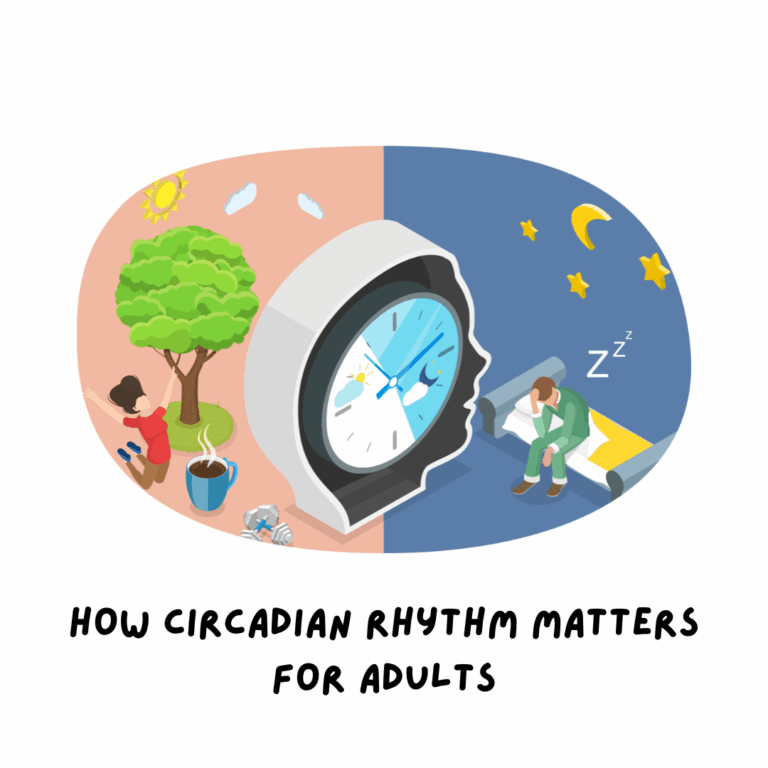
Motherhood is intense. Hormones fluctuate. Sleep and circadian rhythm is scarce. The invisible load is real. However, small grounding practices — like the 3-3-3 rule — help regulate your nervous system in real time.
And sometimes, that small pause is enough to carry you through the next moment.