With Love, Katie.
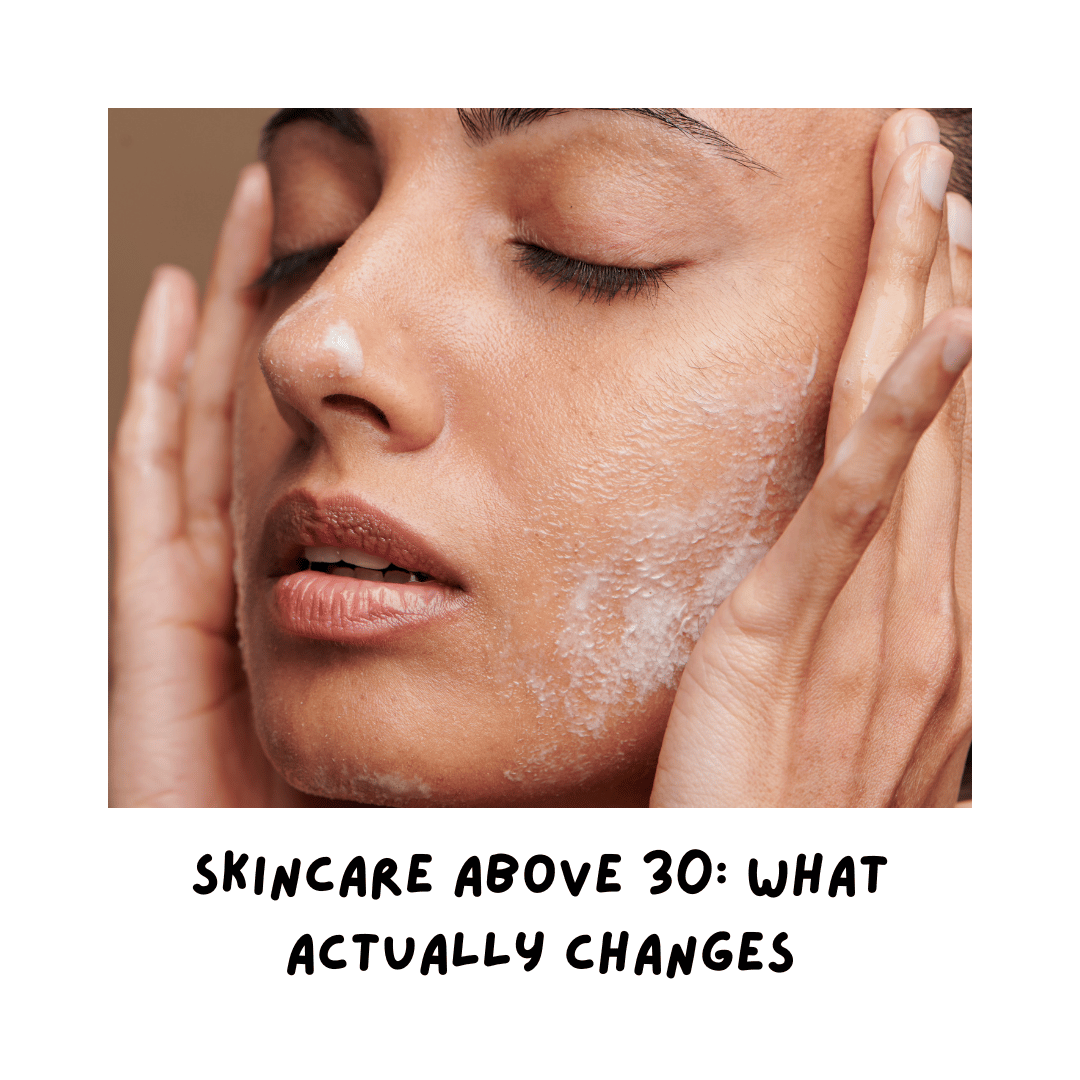

Your skin, at the age of around 30 and after…you know, the skin that used to forgive a late night, a skipped glass of water, a week of less-than-ideal eating, now, for some reason starts to keep records, the tiredness shows differently, and a spot takes longer to heal. The moisturiser you have used for years suddenly feels insufficient or even bad for your skin. Something has changed, and no matter how much water I drink, it doesn’t seem to fully address it. So, skincare after 30 should be a must for all of us!
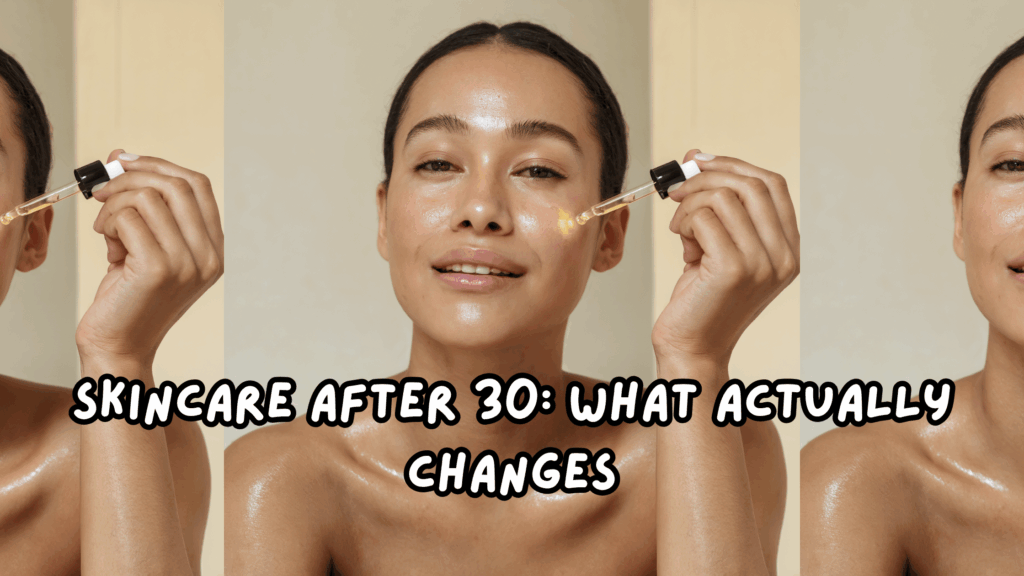
So we all know, around 30, something genuinely has changed. Several things, actually…But understanding what they are is the difference between throwing money at products that don’t work and building a simple, effective routine that your skin will actually respond to.
This is not a twelve-step programme nor a luxury beauty post. This is an honest, practical guide for a mother in her thirties who wants to understand what is happening to her skin and of course, to do something intelligent about it.
Your Skin, My Skin
Most of us think about skin from the outside in — how it looks, how it feels to the touch, whether it is behaving itself today. But skin is not primarily a cosmetic surface. It is your body’s largest organ, covering approximately 1.5 to 2 square metres of surface area and accounting for roughly 15% of your total body weight. And it is doing something far more complex than simply containing everything else.
Your skin is your first line of immune defence — a physical and chemical barrier that identifies and responds to pathogens, allergens, and environmental threats before they can reach your internal organs. It is your primary temperature regulator, managing heat through sweat glands and blood vessel dilation and constriction. Moreover, it is a sensory organ of extraordinary sensitivity, housing millions of nerve endings that register touch, pressure, pain, and temperature — keeping you connected to the world around you and signalling danger before your conscious mind has processed it.
And let’s not forget another important role of your skin: it is also a detoxification organ. A meaningful proportion of the body’s waste elimination happens through the skin via sweat — which is one of the reasons that chronic stress, poor sleep, and hormonal disruption show up on the face so reliably. The skin is not causing the problem. It is reporting it, faithfully, from the inside out.
What Actually Changes in Your Skin After 30
The changes that begin in your thirties are real, measurable, and rooted in biology. None of them is catastrophic, so no worries at all. But they do require a different approach than what worked in your twenties. If you have a good skincare routine after 30, your skin will shine and thank you ten years later.
Collagen Production Slows Down
We talked about collagen in detail in our last post, but it bears repeating here, specifically in the context of skin. Starting in your mid-to-late twenties, collagen production decreases by about 1% per year. Collagen is what gives skin its firmness, structure, and that characteristic bounce that young skin has. As production slows, skin appears thinner, less resilient, and more prone to fine lines — particularly around the eyes, mouth, and forehead.
What makes this particularly significant for women is the hormonal link. Oestrogen plays a critical role in stimulating collagen production through receptors on the skin’s fibroblast cells. As oestrogen begins its gradual decline through your thirties — accelerating further in perimenopause — so does the skin’s structural scaffolding. This is not vanity science, but only the reason a thoughtful skincare routine in your thirties is genuinely preventative medicine for your skin’s long-term health.
Cell Turnover Slows Down
In your twenties, your skin renews itself approximately every 28 days. By your thirties, that cycle begins to lengthen — meaning dead skin cells linger on the surface for longer before being shed. The result: skin that looks duller, feels rougher, and has an uneven texture that no amount of good lighting quite fixes.
Slower cell turnover also means that pigmentation — sun spots, post-inflammatory marks from breakouts, hormonal melasma — sits on the surface for longer and appears more pronounced. Pigmentation can look darker simply because it sits on a less reflective surface. Gentle, consistent exfoliation becomes not a luxury but a practical necessity.
Natural Oil Production Decreases: Skincare after 30 changes too
The skin’s sebaceous glands produce less oil as you move through your thirties. For women who struggled with oiliness in their twenties, this can initially feel like a relief — until the tightness, flakiness, and sensitivity arrive. Reduced oil production means the skin’s natural barrier is less robust, making it more vulnerable to moisture loss, environmental damage, and irritation.
This is why a moisturiser that worked perfectly at 24 may feel thin and insufficient at 34. Your skin’s needs have genuinely changed. It needs richer, barrier-supporting ingredients — not because you are ageing “badly” but because the biology of your skin has shifted.
Hormonal Fluctuations Show on Your Skin
How can I hate this part…but this is my reality too…Oestrogen, progesterone, and cortisol — the hormones we have been talking about throughout this blog — all have receptors in the skin and directly influence how it behaves. Fluctuating hormones in your thirties can produce a confusing combination: adult breakouts around the jaw and chin in the week before your period, combined with dryness and sensitivity at other times of the month.
Stress hormones are particularly relevant here. When cortisol is chronically elevated — as it so often is in a busy mother’s life — it promotes inflammation, slows skin repair, breaks down collagen, and disrupts the skin’s barrier function. The skin of a chronically stressed mother is not just tired-looking. It is physiologically compromised. Addressing skin health without addressing stress is, in part, working against yourself.
Hydration Retention Becomes Less Efficient
Hyaluronic acid — a molecule that occurs naturally in the skin and holds up to 1,000 times its weight in water — is produced in decreasing quantities as we age. By your thirties, the skin’s ability to retain moisture begins to diminish, contributing to that flattened, less-plump appearance that comes with time.
This is the science behind why hyaluronic acid has become such a significant skincare ingredient — but there are important nuances to using it correctly, which we will come to.
Skincare after 30: The Ingredients That Work
Here is where most skincare articles overwhelm you with a product list. I am going to do the opposite — give you five ingredients that are evidence-based, widely available, and collectively address everything that is changing in your skin after 30. You do not need all five immediately, nor do you need all the expensive brands. You need to understand what each does and use it consistently.
1. SPF — Non-Negotiable
If you do nothing else from this list, wear SPF. Daily: every morning. Rain, winter, overcast days, literally every day. If your skincare after 30 needs to be simple, SPF should always be included in the morning.
Up to 80% of visible skin ageing is caused by UV exposure — not chronological age. The fine lines, the pigmentation, the loss of firmness — the majority of what we call “ageing” is actually photodamage. The single most effective anti-ageing intervention available to you costs less than almost any serum on the market and is available everywhere.
SPF 30 minimum. SPF 50 if you can find one you like. Applied as the last step of your morning routine, every morning, without exception. If the texture of sunscreen has put you off in the past — look for modern mineral or hybrid formulas that sit well under makeup. The formulations have improved enormously. There is no longer a good excuse, so go and buy one that fits your skin perfectly.
My recommendation as a mom of two with acne-prone skin? Cerave: it works good for me.
2. Vitamin C
Vitamin C serum, applied in the morning, does two important things. First, it neutralises free radicals (the unstable molecules generated by UV exposure and pollution that break down collagen and accelerate skin ageing). Second, it actively supports collagen synthesis, which is a required cofactor in the enzymatic process that creates collagen fibres in your skin.
Look for the words ascorbic acid on the label. Concentrations between 10–20% are effective for most skin types. Apply it to clean skin in the morning, before your moisturiser and SPF.
A practical note: vitamin C serum can sting slightly on sensitive skin. If this happens, start with a lower concentration (10%) or apply it every other morning until your skin adjusts. Vitamin C and SPF is your most powerful morning combination — the antioxidant protection of vitamin C plus the physical barrier of SPF is genuinely greater than either alone. I use this, from Geek and Gorgeous: Did you know they are a small business from Hungary?
3. Retinol — skincare in the evenings
Retinol is a derivative of vitamin A and is arguably the most well-researched topical anti-ageing ingredient. It works by increasing cellular turnover — accelerating the rate at which your skin sheds old cells and generates new ones — and by stimulating collagen production in the deeper layers of the skin. I love the one from the above-mentioned G and G.
The result, with consistent use over months: smoother texture, more even tone, softer fine lines, and a general improvement in skin quality that is genuinely visible.
The keyword is consistent. Retinol works slowly and cumulatively. It also requires an adjustment period, therefore in the first few weeks, skin may experience some dryness, flaking, or sensitivity. This is normal and temporary. The way to manage it is to start low and slow: use a low-concentration retinol (0.025–0.05%) two to three times a week, in the evening only, and increase frequency gradually as your skin adjusts.
Important notes: retinol makes your skin more sensitive to the sun, which is why SPF in the morning becomes even more critical when you introduce it. Retinol is not recommended during pregnancy or breastfeeding, so always consult with your doctor.
Pairing niacinamide with retinol can help mitigate dryness and irritation — apply niacinamide in the morning and retinol at night for the ideal combination.
4. Hyaluronic Acid (HA)
Hyaluronic acid is a brilliant hydrating ingredient — with one important caveat that most products and articles neglect to mention. It works by attracting moisture from its environment. In a humid environment this is excellent. In a dry environment — or if applied to completely dry skin — it can draw moisture from the deeper layers of your skin instead of from the air, potentially leaving skin more dehydrated than before.
The correct way to use hyaluronic acid: apply it to slightly damp skin, immediately after cleansing, while your face still has a little moisture on it. Then seal it with a moisturiser. This traps the hydration on the surface where you want it rather than letting it evaporate.
Hyaluronic acid can be used morning and evening. It pairs beautifully with almost every other ingredient in your routine — it complements vitamin C in the morning and counteracts the potential drying effect of retinol at night.
Use first your vitamin-C serum, as it is probably water-based, so it will absorb rapidly, then make sure you add the HA.
5. Niacinamide — The Multi-Tasker You Need
Niacinamide — vitamin B3 — is the ingredient that does the most things quietly and well. It supports the skin’s barrier function, reduces inflammation, regulates oil production, fades pigmentation over time, and improves overall skin tone and texture. It is also one of the gentlest actives available, suitable for all skin types including sensitive and reactive skin.
Niacinamide + hyaluronic acid is a particularly effective pairing: hyaluronic acid draws moisture into the skin while niacinamide helps strengthen the skin’s barrier to lock it in. For a tired mother whose skin is dealing with both dehydration and stress-related inflammation, this combination is a genuinely useful foundation.
Niacinamide can be used morning or evening — or both. Apply it after any water-based serums and before your moisturiser. So, for example, Vitamin C, Niacinamide, and then the holy SPF.
Your Skin Through Your Cycle
Most skincare advice treats your skin as if it behaves the same way every single day of the month. It doesn’t — and if you’ve ever noticed that your skin is glowing one week and breaking out the next, or that your moisturiser feels perfect for ten days and then suddenly insufficient, this is exactly why.
Your skin is cycle-syncing whether you are or not. It is already responding to the hormonal shifts happening inside your body — oestrogen rising and falling, progesterone peaking and dropping, sebum production fluctuating accordingly. Understanding that rhythm, even loosely, can make your skincare feel less random and more like something you are working with rather than endlessly reacting to.
Menstruation and skin-care rutin (days 1–5)
Both oestrogen and progesterone drop to their lowest point. Skin can feel dull, dry, sensitive, and more reactive than usual. This is the time for maximum gentleness — a rich, barrier-supporting moisturiser, minimal actives, and extra hydration. So do not use retinol, if you are full of acnes.
Follicular phase and skin-care (days 6–13)
Oestrogen begins to rise, bringing with it an increase in collagen production, improved skin hydration, and a natural glow. This is often when skin feels at its most cooperative — plump, clear, and resilient. A lighter moisturiser may feel sufficient. This is also a good window to introduce or increase active ingredients like retinol, as skin tends to be less reactive. Use your retinol bravely, add some vitamin C and more.
Ovulation (around day 14): Oestrogen peaks and skin often looks its best — luminous, even-toned, bouncy. Enjoy it. Minimal intervention needed, but you can use any treatment you like: this is when I use my Skin Destructor Peeling.
Luteal phase (days 15–28): Progesterone rises and sebum production increases, which can lead to congestion, enlarged pores, and the hormonal breakouts that tend to appear along the jaw and chin in the week before your period. This is the time to introduce a gentle salicylic acid or clay-based product to manage oil, and to scale back on heavy creams that may clog pores.
A Simple Routine: Get Inspired, but be Uniqe
You do not need more than this. But listen to your skin, and make sure you know what she needs.
Morning: Gentle cleanser → Vitamin C serum → Hyaluronic acid (on damp skin) → Moisturiser → SPF
Evening: Oil cleanser or balm to remove SPF and makeup → Gentle cleanser → Retinol (2–3 nights per week in the first weeks, until your kin gets used to eat) or Niacinamide (on other nights) → Richer moisturiser or facial oil, depending on your skin
That is it. Five products in the morning, four in the evening. No sheet masks, no ten-step routines, no £80 serums that do the same thing as £12 ones. Consistency with these five ingredients over three to six months will do more for your skin than any impressive-sounding product used sporadically.
The Bigger Picture
Skin health after 30 is not just about what you put on your face. It is also — and this is the part the beauty industry has a financial interest in not telling you — about what is happening inside your body.
So make sure you take care for your cortisol levels and your sleep quality. Take something to support your collagen and take care of your nutrition as well. More importantly, your hydration, gut health, and hormones are important as well. All of these show up on your skin, one way or another. The mother who is chronically stressed, poorly nourished, and running on disrupted sleep will find that even the best skincare routine delivers partial results — because the skin is a mirror of the body’s internal state.
The most effective skincare routine you can build combines the five ingredients above with the nervous system support, nourishing food, and genuine rest that we talk about across this blog. They are not separate conversations. They are the same conversation — about a woman who deserves to feel good in her body, from the inside out.
Start with SPF tomorrow morning, then a few days later add one ingredient at a time. Be consistent, be patient, and be kind to the skin you are in.