With Love, Katie.
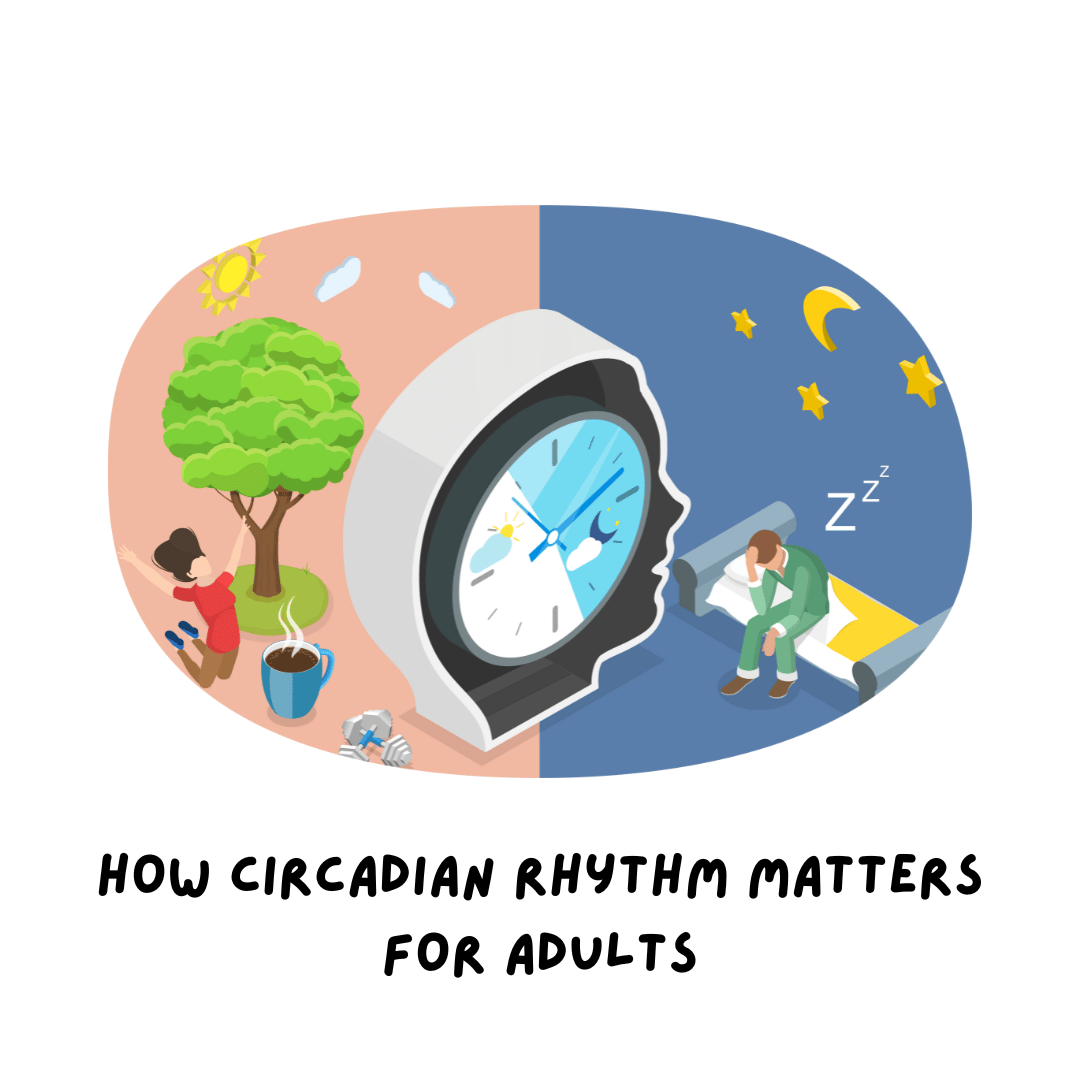

As a mom of two, let me tell you, I know everything about a baby’s circadian rhythm. But when it comes to our sleep… well…As usual, let’s dive in together. If you’ve ever felt tired at the “wrong” time of day, wide awake late at night, or exhausted even after a full night’s sleep, your circadian rhythm may be out of sync. Because let me tell you one thing: there is such a thing as adult circadian rhythm. In today’s fast-paced, screen-filled world, many adults struggle with sleep, energy dips, and mood fluctuations — often without realizing that their internal sleep clock plays a major role.
Your circadian rhythm quietly guides when you feel alert, sleepy, hungry, and even emotionally balanced. When it’s supported, life feels smoother. However, when it’s disrupted, everything from sleep quality to digestion and mental health can suffer. Let’s explore what circadian rhythm really is, why it matters for adults, and how you can gently reset your sleep clock.
What Is Circadian Rhythm?
Here is your easy circadian rhythm definition. The circadian rhythm is your body’s natural 24-hour internal clock. The term comes from the Latin circa diem, meaning “about a day.” This rhythm is regulated by a small group of cells in the brain (the suprachiasmatic nucleus) and is primarily influenced by light and darkness.
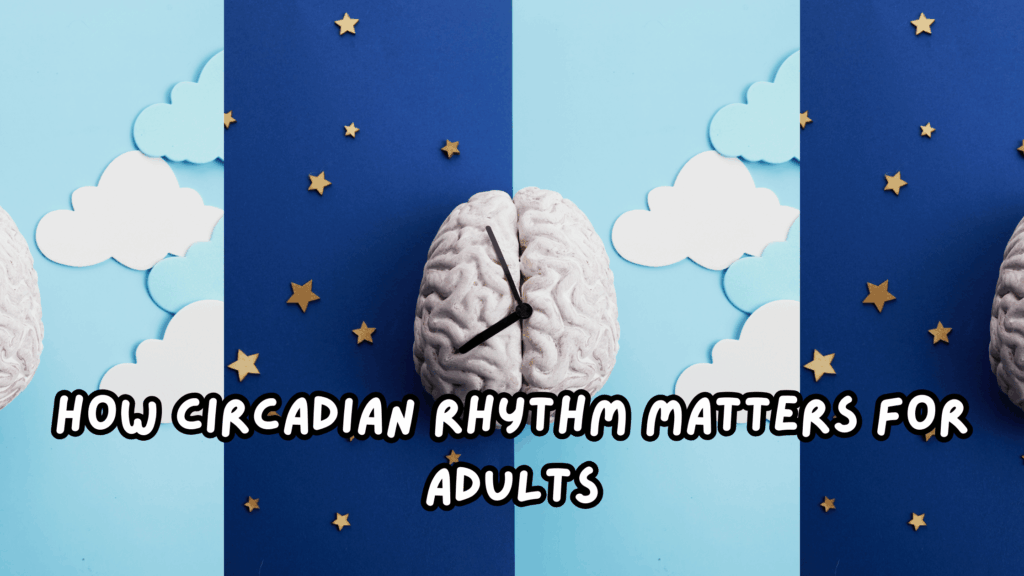
In simple terms, your circadian rhythm tells your body when to wake up, or when to wind down, and go to sleep.
It also influences hormone release (like melatonin, your sleep hormone and cortisol, your stress hormone), body temperature, digestion, and even mood regulation. As a result, circadian rhythm health affects far more than just sleep.
What Is the Circadian Rhythm of an Adult?
An adult circadian rhythm typically follows a predictable pattern:
- Morning: Cortisol rises to help you wake up and feel alert.
- Daytime: Energy and focus are higher, especially mid-morning to early afternoon.
- Evening: Melatonin begins to rise, signaling the body to wind down.
- Night: Body temperature drops, and sleep pressure increases, preparing you for rest.
However, modern lifestyles often disrupt this natural rhythm. Late-night screen use, irregular sleep schedules, caffeine late in the day, and artificial lighting can confuse your sleep clock. Over time, this can lead to fatigue, poor sleep quality, and even circadian rhythm sleep disorders.
Circadian Rhythm Sleep Disorder
Aka, what happens when your sleep clock is off? Circadian rhythm sleep disorders occur when your internal clock is misaligned with your daily schedule. Common signs include:
- difficulty falling asleep at night
- trouble waking up in the morning
- feeling sleepy during the day
- alertness late at night
- irregular sleep patterns
Shift work, frequent travel across time zones, and inconsistent sleep routines are common triggers. However, even without a diagnosed disorder, many adults experience milder circadian rhythm disruptions that affect energy, mood, and overall well-being.
Circadian Rhythm and Adult Health
When your circadian rhythm is supported, and your sleep clock is aligned, the benefits reach far beyond simply “sleeping better.” Over time, a regulated circadian rhythm supports your whole body and mind in very practical ways:
Better sleep quality
When your internal clock is in sync with natural light and dark cycles, falling asleep becomes easier and staying asleep feels more natural. Instead of lying awake or waking up feeling unrefreshed, your body moves through deeper, more restorative sleep stages, which are essential for physical recovery, memory consolidation, and emotional processing. You will definitely feel better in the mornings.
Stable energy levels
A healthy circadian rhythm helps regulate when you feel alert and when you naturally feel tired. As a result, energy becomes more evenly distributed throughout the day. Rather than relying on constant caffeine or sugar for quick boosts, your body produces steadier, more sustainable energy — reducing afternoon crashes and that familiar “wired but tired” feeling.
Improved mood and emotional regulation
Sleep and circadian rhythms are closely linked to mental health. When your sleep clock is supported, your nervous system is better able to regulate emotions. This can translate into more patience, fewer mood swings, and a greater sense of emotional resilience in daily life.
Balanced hormones
Many hormones follow circadian patterns, including cortisol, melatonin, insulin, and reproductive hormones. When your circadian rhythm is aligned, these hormones are released at more appropriate times, supporting stress regulation, metabolic balance, and hormonal harmony throughout the day.
Healthy metabolism and digestion
Your digestive system also follows daily rhythms. Eating and sleeping in alignment with your circadian clock supports insulin sensitivity, nutrient absorption, and gut motility. This can improve digestion, reduce bloating, and support a healthier metabolic response to meals.
Stronger immune function
Your immune system is highly active during sleep, performing repair and regulation processes. A stable circadian rhythm supports immune cell function and inflammatory balance, helping your body recover from daily stressors and better defend against illness over time.
In contrast, chronic circadian disruption has been linked to increased stress, burnout, metabolic issues, mood disorders, and long-term health concerns. Therefore, supporting your sleep clock is not just about rest — it’s about whole-body health.
How to Fix Circadian Rhythm Naturally (A Scientist Mom Tips)
Although modern life often pulls us away from natural rhythms (let me tell you, that people look at me like crazy when I say that I love walking without shoes or just staying in the window after waking up and having some natural D vitamin) there are simple ways to support and reset your circadian rhythm.
1. Get Morning Light
Morning sunlight is one of the strongest signals for your circadian rhythm. Even 10–20 minutes of natural light exposure early in the day helps reset your sleep clock and improve nighttime melatonin production.
2. Create Consistent Sleep and Wake Times
Your body thrives on rhythm. Going to bed and waking up at roughly the same time each day strengthens your internal clock — even on weekends.
3. Reduce Evening Light Exposure
Artificial light, especially blue light from screens, suppresses melatonin. Dim lights in the evening, avoid screens before bed when possible, and create a softer nighttime environment.
4. Support Daytime Activity, Evening Wind-Down
Move your body and stay active during the day, then slow down in the evening. This contrast helps your nervous system recognize when it’s time to be alert and when it’s time to rest.
What Is the 10-5-3-2-1 Rule for Sleep?
I have reed this good rule a few day ago, let me share it with you (1). The 10-5-3-2-1 rule is a simple framework to support your sleep clock:
- 10 hours before bed: No caffeine
- 5 hours before bed: No large meals
- 3 hours before bed: No alcohol
- 2 hours before bed: No work
- 1 hour before bed: No screens
While not everyone can follow this perfectly, and it is not even mandatory, even partial application can significantly improve sleep quality and circadian rhythm alignment.
What Is the 80/20 Rule for Sleep?
The 80/20 rule for sleep means you aim for consistency most of the time, not perfection. If you maintain healthy sleep habits about 80% of the time, your circadian rhythm can remain stable even if life occasionally disrupts your routine. It is the general 80/20 rule we use in our diet and when trying to stay healthy.
This approach is especially helpful for adults with busy lives, parents, or shift workers. Small deviations won’t undo your progress if your overall rhythm is supportive.
Adult Circadian Rhythm in Modern Life
Modern adults often live out of sync with natural light-dark cycles. Late nights, early alarms, constant stimulation, and digital screens push the sleep clock later while responsibilities pull wake time earlier. This mismatch creates chronic sleep debt.
However, small, consistent adjustments, like light exposure, gentle evening routines, and stable sleep timing, can gradually bring your circadian rhythm back into balance.
Conclusion
Your circadian rhythm is not just about sleep; it’s the foundation of your daily energy, mood, hormones, and overall health. When your sleep clock is supported, life feels more manageable. When it’s disrupted, everything feels heavier.
The good news is that you don’t need extreme routines or perfect discipline to support your circadian rhythm. Small, realistic shifts — especially around light exposure and sleep timing- can gently guide your body back into alignment.
Adult circadian rhythm will thank you — quietly, but powerfully.