With Love, Katie.
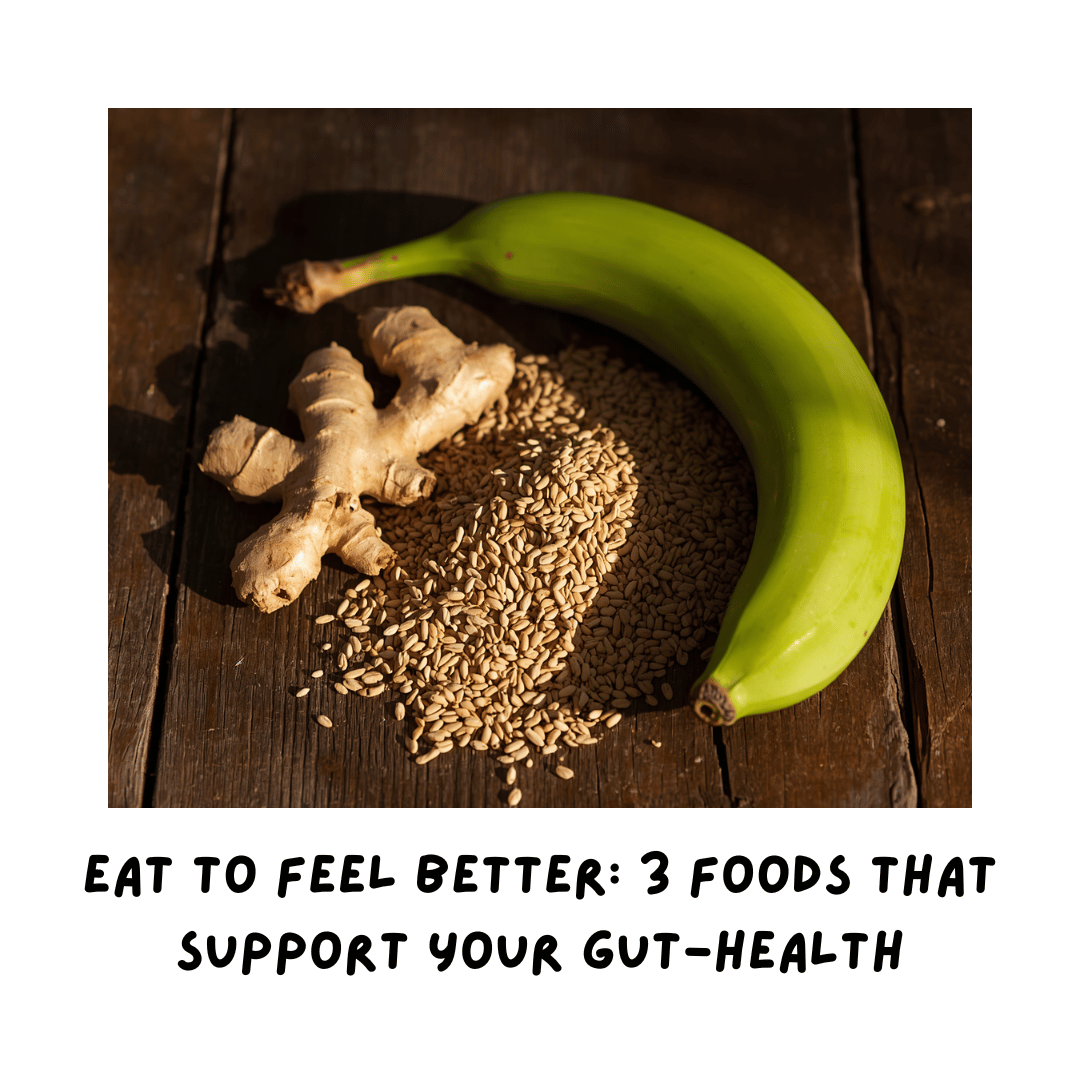

3 Foods That Support Your Gut-Health is Part 1 of the Eat to Feel Better Series. I really hope this will be your favourite science-ba(c)ked, simply explain food-related content.
Your gut is not just a digestion machine. It produces neurotransmitters (like serotonin, your happiness hormone), regulates inflammation, communicates directly with your brain via the vagus nerve, and plays a central role in the processing and clearance of your hormones. When it is well-supported, you feel it in your energy, your mood, your skin, your sleep. When it is struggling, you feel that too.
The good news is that the gut responds remarkably well to consistent, targeted nourishment. Three foods in particular — backed by solid research, available in any supermarket, and easy to work into daily life — make a measurable difference. Let’s go through them.
This post is for general information only and does not constitute medical advice. Please consult your healthcare provider before beginning any new supplement.
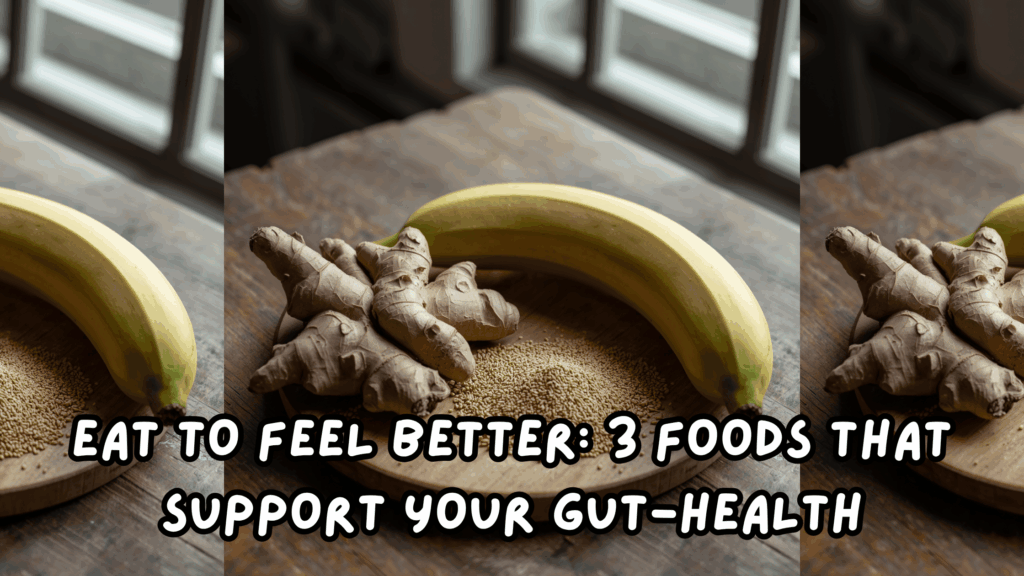
Here are the ultimate 3 foods that support your gut health. A well-needed short list for busy, tired moms.
1. Psyllium Husk
Psyllium husk comes from the seed husks of Plantago ovata, a plant native to India. It is inexpensive, widely available, and among the most evidence-backed fibre supplements available. Most people have heard of it, but very few are actually using it.
When psyllium contacts water, it forms a thick, viscous gel. That gel moves through your digestive system intact, doing several things simultaneously (1).
Psyllium alters the gut microbiota positively, acts as a potent bowel-regulating agent, and has anti-inflammatory action in the gut. These three mechanisms work independently of each other — meaning psyllium delivers multiple gut health benefits through distinct pathways simultaneously (2).
On the microbiome side, psyllium contains arabinoxylan, which is prebiotic and boosts the gut microbiome, specifically increasing bacteria that produce butyrate — the short-chain fatty acid that fuels the cells lining your colon. We explored butyrate in detail in the fermentation post. Its production is one of the most important functions of your gut microbiome, and psyllium directly feeds it.
On bowel regularity: psyllium normalises the colon’s water content. It softens hard stools by increasing water content in the colon, and it firms loose stools by absorbing excess water, so you see, this is not even a laxative, just a regulator. But please, drink that plus cup of water.
How to Use Psyllium Husk
Start with one teaspoon (approximately 5g) in a large glass of water — at least 250ml — once daily. This is important. Psyllium without adequate water is ineffective and can cause discomfort. The water is part of the mechanism. Work up gradually to two teaspoons if needed. Some people add it to smoothies, stir it into yoghurt, or mix it into overnight oats. The texture thickens quickly, so drink it promptly once mixed.
Take it at least two hours away from any medications, as psyllium can affect absorption. Morning or evening works equally well — consistency matters more than timing.
Add it to your oats, along with some chia seeds, flaxseeds, and apples, as they all contain similar soluble fibre, though at lower concentrations. I have it with yogurt, with my oats and one green banana (a very good prebiotic), and always have a big cup of water after. Nothing fancy, again.
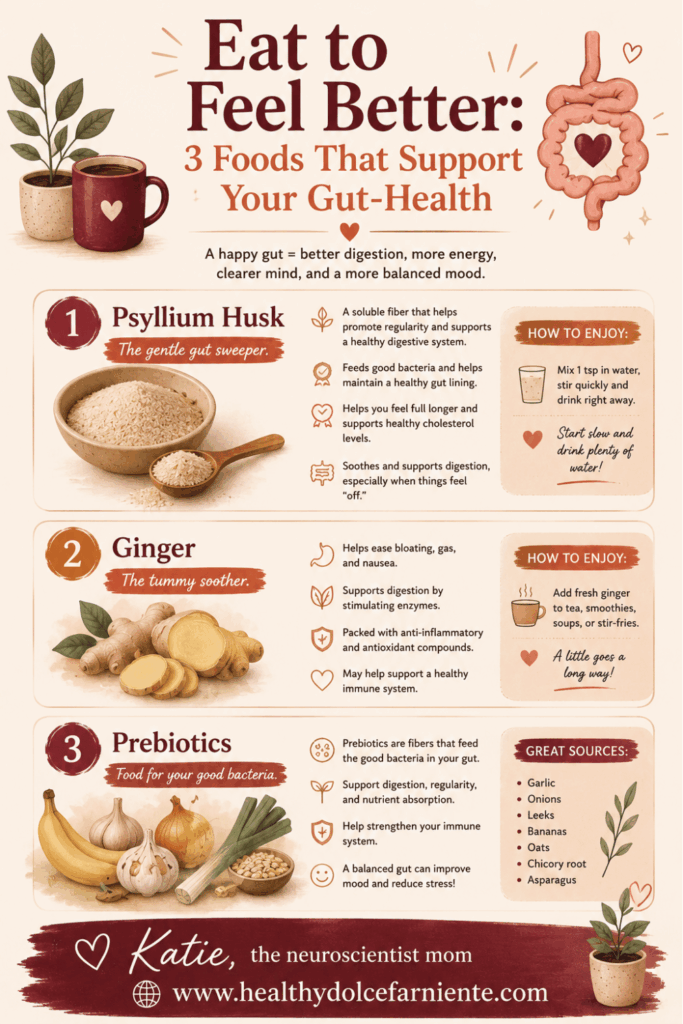
2. Ginger
Ginger has been used medicinally for over 2,000 years across Ayurvedic and Chinese medicine. Modern research has spent decades catching up to what traditional healers already knew. The evidence is now substantial, specific, and genuinely useful.
Ginger’s active compounds, gingerols and shogaols, work on the gut through two main pathways (3).
First, motility. Ginger can support digestive health in people with IBS and IBD by promoting gastric motility — easing the movement of food through the gastrointestinal tract. A sluggish gut is a gut where food and waste sit longer than they should, allowing fermentation gases to build up, inflammatory compounds to linger, and beneficial bacteria to be displaced by less helpful species. Ginger gets things moving. That is not a minor contribution.
Second, inflammation. Gingerols and shogaols suppress immune overactivity, lowering IL-1β and TNF-α while blocking key inflammatory pathways that worsen chronic gut conditions. IL-1β and TNF-α are pro-inflammatory cytokines, signalling molecules that drive systemic inflammation. Their reduction is measurable and meaningful, particularly for mothers carrying chronic stress-related inflammation (3).
Studies have found that ginger has a number of potential benefits for digestive health, including reducing intestinal cramping, preventing indigestion, reducing bloating, and reducing gas. For a tired mother dealing with the digestive consequences of chronic stress and a suboptimal diet, these are precisely the symptoms that need addressing (4).
Ginger also supports the gut-brain axis. Modern research suggests ginger can influence how quickly food moves through your digestive tract, how much inflammation and oxidative stress your gut tissues experience, and how your gut bacteria and gut lining function over time.
How to Use Ginger
Fresh ginger is the most potent form. Grate or finely slice a thumb-sized piece into hot water with lemon as a morning drink. Add it to soups, stir-fries, and sauces. Grate it over roasted vegetables. Use it in salad dressings.
Dried ginger powder retains most of the active compounds and works well in cooking and smoothies.
As a supplement, studies consistently use 1–2 grams of ginger powder daily. That is roughly half a teaspoon. Easy to reach through food without any capsules at all.
A warm ginger tea thirty minutes before or after a meal is a practical and pleasant daily habit that supports digestion, reduces bloating, and delivers a meaningful anti-inflammatory dose. Ten minutes to make. Worth the ritual.
3. Prebiotics
This is where the language around gut health gets confused. Prebiotics, probiotics, postbiotics: the terms overlap in popular wellness content in ways that obscure their actual, distinct meanings. Let’s be precise.
Probiotics are the healthy, friendly bacteria that live inside your gut. Prebiotics are a group of nutrients, mainly fibre, that feed the beneficial bacteria in your gut. Postbiotics are the bioactive compounds that the probiotic bacteria produce when they consume prebiotics (5).
In other words, prebiotics are the food. Probiotics are bacteria. Postbiotics, including butyrate, the short-chain fatty acid discussed throughout this series, are what the bacteria produce when they have been fed.
Prebiotics are non-digestible carbohydrates that support good gut bacteria by providing them with the essential nutrients they need to flourish. Psyllium husk, discussed above, is itself a prebiotic. But it is not the only one worth knowing about.
The Best Prebiotic Foods
Garlic. One of the richest sources of inulin, a prebiotic fibre that selectively feeds Bifidobacterium and Lactobacillus species. Add it to everything. Raw garlic has the highest prebiotic content; cooking reduces but does not eliminate it.
Onions and leeks. Also high in inulin and fructooligosaccharides (FOS). A base of onion and garlic in cooking is not just flavour — it is a daily prebiotic dose embedded in ordinary meals.
Jerusalem artichokes. The highest prebiotic content of any common vegetable. Worth introducing gradually — the gut microbiome responds enthusiastically to their FOS content, sometimes with initial bloating that settles within a week or two.
Oats. Contain beta-glucan, a soluble fibre with prebiotic properties and well-researched cholesterol-lowering and blood sugar-stabilising effects.
Green bananas and cooked-then-cooled potatoes. Both are high in resistant starch — a form of starch that resists digestion in the small intestine and reaches the colon intact, where it acts as a prebiotic substrate. Cooking potatoes and allowing them to cool converts some of the digestible starch to resistant starch. Potato salad, in other words, is a prebiotic food. Worth knowing.
Flaxseeds. Contain both soluble and insoluble fibre with prebiotic properties, alongside omega-3 fatty acids and lignans that support hormonal balance.
A Practical Note on Prebiotics and Bloating
Introducing large amounts of prebiotic foods too quickly can cause gas and bloating because your gut bacteria respond energetically to a new and abundant food source. This is normal. It is the microbiome adjusting. Start slowly, increase gradually, drink plenty of water, and give your gut two to three weeks to adapt before drawing conclusions.

A Note on Probiotics
Probiotics, the live bacteria consumed via food or supplements, are the most familiar gut health intervention and, often, the most oversimplified. Probiotics are live microorganisms, primarily bacteria, that confer a health benefit when consumed in adequate amounts. The gut already harbours a vast and complex community of bacteria, and probiotics support that community.
The key phrase is “in adequate amounts.” Most commercial probiotic supplements contain between 1 and 50 billion colony-forming units (CFU) of a small number of strains. The human gut contains an estimated 38 trillion bacteria representing thousands of strains. The contribution of a supplement, while real, is proportionally modest.
This does not mean probiotics are useless — they are well-evidenced for specific applications, including antibiotic-associated diarrhoea, certain IBS symptoms, and immune support. The strain matters enormously. Lactobacillus rhamnosus GG, Lactobacillus acidophilus, and Bifidobacterium longum are among the most well-researched for general gut health.
Food-based probiotics — live-culture yoghurt, kefir, unpasteurised sauerkraut, kimchi, miso — deliver diverse bacterial strains alongside the nutrients and fibre of the food itself, which research increasingly suggests is more beneficial than isolated supplements for most people.
Final Ideas
Prebiotics, probiotics, and postbiotics have a symbiotic relationship. It is important to have all three in your diet to support gut microbiome health.
The most effective gut health strategy, based on current evidence, is this: feed the bacteria you already have with diverse prebiotic fibre, introduce live cultures through real fermented foods regularly, support SCFA production by keeping fibre intake consistent, and reach for targeted probiotic supplements when specific symptoms or circumstances warrant it.
Psyllium, ginger, and prebiotic foods do all of the above. These 3 foods that support your gut health are all accessible, inexpensive, and ready to work the moment you begin.
This is Part 1 of the Eat to Feel Better series. Coming next: 7 Foods That Support Your Cortisol.