With Love, Katie.
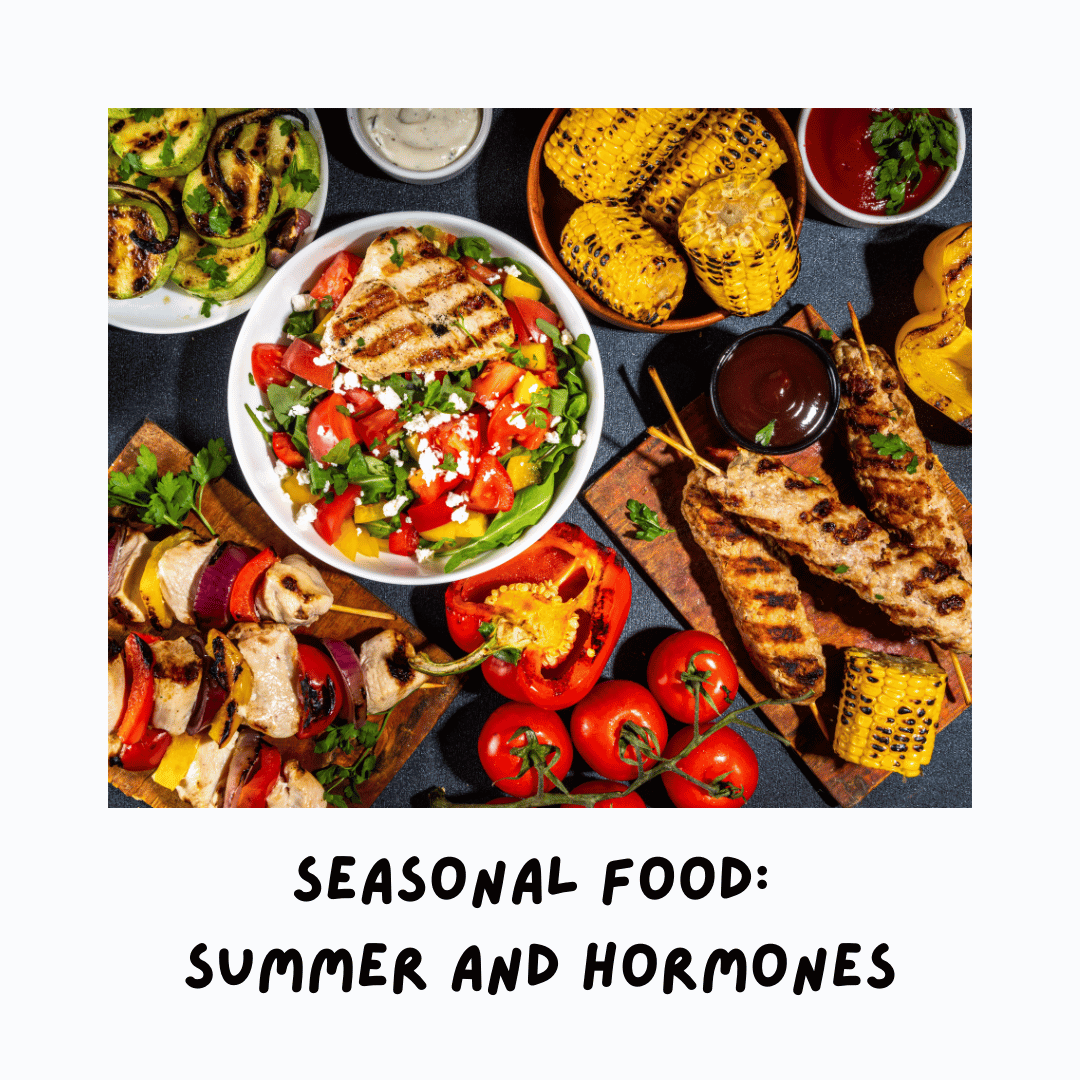

Summer looks good from the outside. Long evenings, warm light, slower mornings. But inside your body, a significant amount is shifting and not all of it quietly. So, summer and hormones? Well, in my opinion, it deserves a whole post.
The longer days, the heat, the changes in sleep, the disrupted routines…well, all of these affect your hormones directly. Understanding what is happening gives you the tools to work with your summer body rather than be blindsided by it.
Stay with me to see how food, circadian rhythm, summer and hormones are related.
Your Circadian Rhythm in Summer
Your circadian rhythm is your body’s internal 24-hour clock. It governs sleep and wake cycles and is aligned with environmental light and darkness. Circadian rhythms impact various physiological processes, including sleep quality, energy production, and hormonal balance, aka the regulation of melatonin, cortisol, insulin, and sex hormones.
In summer, the clock shifts. The days are longer. Light enters earlier in the morning and lingers well into the evening. Your body registers this through specialised light-sensitive cells in the eyes, which signal the brain’s suprachiasmatic nucleus — the master circadian pacemaker — to adjust hormone production accordingly.
Melatonin production is suppressed by light. In summer, it rises later and falls earlier, compressing the window of deep, restorative sleep. This is not imagination. It is measurable, and it affects the hormonal cascade that depends on sleep timing. Circadian disruptions can lead to reversals of the cortisol-melatonin rhythm, causing daytime fatigue and drowsiness as well as trouble falling and staying asleep.
For mothers already managing fragmented sleep and elevated cortisol, summer’s light environment compounds the challenge. The fix is practical: blackout curtains, consistent sleep and wake times even when it is still light outside, and reducing screen exposure after 8 pm to allow melatonin to rise on its adjusted schedule.
Heat, Cortisol, and Testosterone
Warm weather does more than make you sweat. Rising temperatures lead the body to work overtime to maintain equilibrium, particularly affecting hormones like cortisol, oestrogen, and progesterone. Higher cortisol levels can spike during heatwaves, disrupting mood, sleep patterns, and even menstrual regularity.
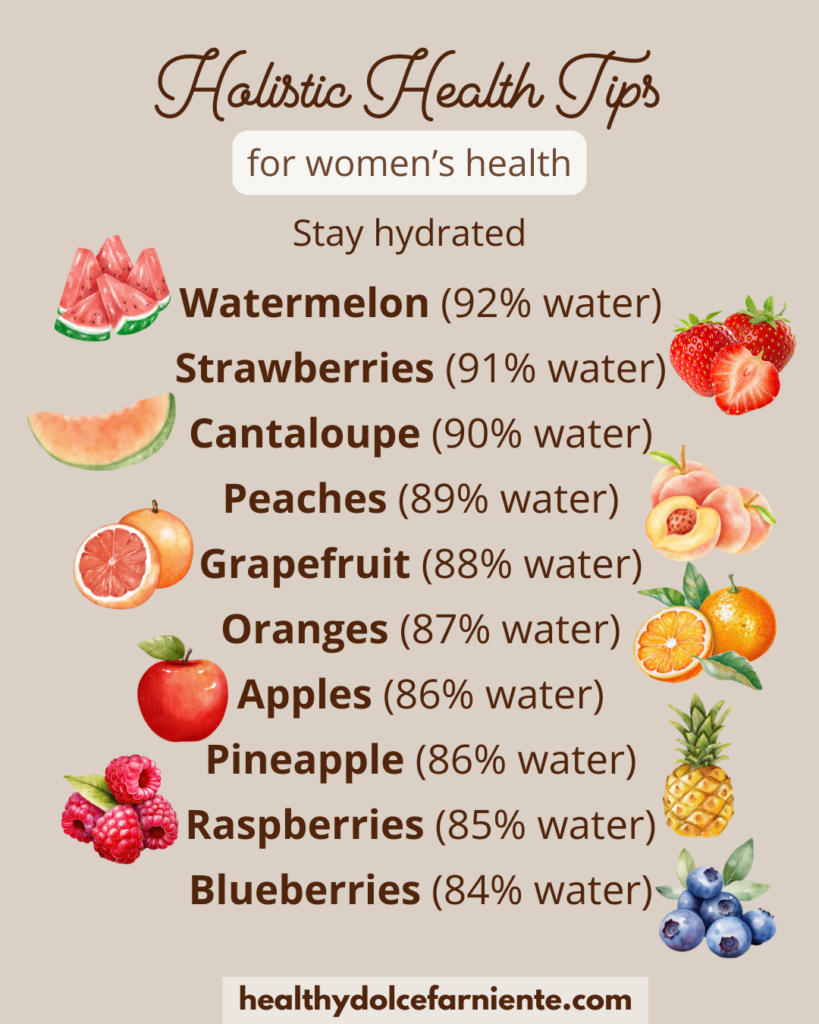
Heat is a physical stressor. The body perceives it as a threat to homeostasis and responds by activating the same HPA axis, the hypothalamic-pituitary-adrenal pathway, that activates during psychological stress. Cortisol rises. For a mother who is already carrying a chronic cortisol load, a heatwave is not just uncomfortable. It is physiologically additive. Stay hydrated during summer. It is very important for your overall wellbeing, including hormones to (1)
Testosterone also shifts seasonally. Research across large datasets has shown that testosterone levels are higher in summer, with a direct correlation to environmental temperatures and daylight duration (2). In women, testosterone fluctuates in smaller ranges than in men, but it is not negligible. Slightly elevated testosterone in summer contributes to increased libido, more assertive energy, and, for those prone to it, more sebum production and acne (welcome to my reality, you are not alone).
Oily Skin, Sweat, and Summer Breakouts
This is worth addressing directly because many women experience a noticeable worsening of skin in summer and do not connect it to the hormonal picture. I do see myself having a lot more acne during summer, although my skin hates winter too.
During summer, you might realise you have excess sebum mixed with dead skin cells, clogging pores and creating the perfect environment for acne-causing bacteria.
In summer heat, sweat sits on the skin longer, mixes with sebum, sunscreen, and environmental particles, and creates a warm, occlusive environment that bacteria thrive in. This is called acne mechanica, breakouts caused by heat, sweat, pressure, and friction rather than hormonal fluctuation alone.
The skin-gut connection is also relevant here. Research has found correlations between gut microbiome composition and acne lesion counts (3), with oral probiotics showing improvement in several prospective studies. A gut under inflammatory stress from poor diet, dehydration, or heat stress contributes to systemic inflammation that shows up on the skin.
The practical response: gentle, non-comedogenic skincare in summer. Cleansing after sweating. Fermented foods and adequate fibre to support the gut-skin axis.
Foods That Support Summer Hormonal Balance
Cortisol-Balancing Foods
The most important dietary intervention for summer cortisol is also the simplest. Protein at every meal stabilises blood sugar and prevents the glucose drops that trigger secondary cortisol spikes. Magnesium-rich foods — pumpkin seeds, dark leafy greens, dark chocolate — directly support adrenal function and cortisol regulation. Both are available in abundance in summer and require no special preparation.
Vitamin C is depleted by cortisol — the adrenal glands have the highest concentration of vitamin C in the body, and they use it rapidly under stress. Summer provides it generously: strawberries, red peppers, tomatoes, fresh herbs. Eat them raw where possible, since vitamin C is heat-sensitive.
Adaptogenic herbs are worth noting here too. Ashwagandha, rhodiola, and holy basil (tulsi) have evidence for supporting the adrenal response to stress and moderating cortisol output. A cup of tulsi tea in the afternoon is a quiet, functional act of cortisol support.
Foods That Support Healthy Sweating and Electrolyte Balance
Sweating is not just a temperature regulation mechanism. It is a detoxification pathway. Through sweat, the body eliminates small amounts of heavy metals, environmental toxins, and metabolic waste products. This is a real and underappreciated function, but it also means that heavy sweating without adequate mineral replacement can rapidly deplete electrolytes.
Sodium, potassium, and magnesium are lost in sweat. A diet low in these minerals during summer can lead to fatigue, muscle cramps, headaches, and mood instability, which are often attributed to heat when the actual cause is mineral depletion.
Coconut water provides natural potassium and sodium in a form the body absorbs efficiently. Watermelon is rich in potassium and over 90% water. A pinch of good sea salt in your morning water glass is one of the simplest electrolyte interventions available. Avocado provides potassium alongside healthy fat. Cucumber and courgette contribute water and minerals, along with their prebiotic fibre.
This is not a complicated protocol. It is ordinary summer food, eaten with awareness of what it is doing.
Hydrating Foods — The Hormone Regulators
Dehydration does not only cause headaches and fatigue, but it also significantly impacts hormonal function. Cortisol levels spike when the body senses dehydration stress, further disturbing hormonal harmony (1). Proper hydration supports adrenal health, helps regulate cortisol, and maintains oestrogen and progesterone balance.
The hydrating foods of summer are also the hormonal foods of summer. Watermelon, cucumber, tomatoes, courgette, peaches, berries, leafy greens, all high water content, all rich in phytonutrients that support oestrogen metabolism and reduce systemic inflammation.
Phytoestrogens — plant compounds that modulate oestrogen activity — are found in flaxseeds, soy, lentils, and many summer fruits and vegetables. They do not act like pharmaceutical oestrogen. They bind to oestrogen receptors more weakly, which can have a gentle balancing effect in women with either excess or low oestrogen.
Cruciferous vegetables — broccoli, cauliflower— contain DIM (diindolylmethane), a compound formed during digestion that supports the liver’s clearance of excess oestrogen. For women experiencing hormonal acne, PMS, or water retention that worsens in summer heat, these vegetables are among the most targeted dietary interventions available.
The Summer Hormonal Picture in One Paragraph
Longer days shift the circadian rhythm and compress sleep. Heat stresses the adrenals and elevates cortisol levels. Testosterone rises slightly, increasing sebum production and skin oiliness. Sweating depletes electrolytes. Dehydration amplifies cortisol further.
The dietary response to all of this is largely the same: protein at every meal, magnesium, vitamin C from fresh seasonal produce, electrolytes replenished through food and water, and an abundance of the hydrating, anti-inflammatory, phytonutrient-rich summer vegetables that the season provides in extraordinary variety.
Eat what is growing. Drink enough water. Support your adrenals.
Summer asks more of your hormones than most seasons. Feed them accordingly.
What would you like to:
Circadian rhythm and serotonin: what every mom should know
Cycle-Syncing Guide: Hormones, Sleep, Food and Self-Care
10 Holistic health tips for everyday wellness: Natural remedies for busy moms